/*! elementor – v3.7.8 – 02-10-2022 */
.elementor-heading-title{padding:0;margin:0;line-height:1}.elementor-widget-heading .elementor-heading-title[class*=elementor-size-]>a{color:inherit;font-size:inherit;line-height:inherit}.elementor-widget-heading .elementor-heading-title.elementor-size-small{font-size:15px}.elementor-widget-heading .elementor-heading-title.elementor-size-medium{font-size:19px}.elementor-widget-heading .elementor-heading-title.elementor-size-large{font-size:29px}.elementor-widget-heading .elementor-heading-title.elementor-size-xl{font-size:39px}.elementor-widget-heading .elementor-heading-title.elementor-size-xxl{font-size:59px}
Books
/*! elementor – v3.7.8 – 02-10-2022 */
.elementor-widget-image{text-align:center}.elementor-widget-image a{display:inline-block}.elementor-widget-image a img[src$=”.svg”]{width:48px}.elementor-widget-image img{vertical-align:middle;display:inline-block}
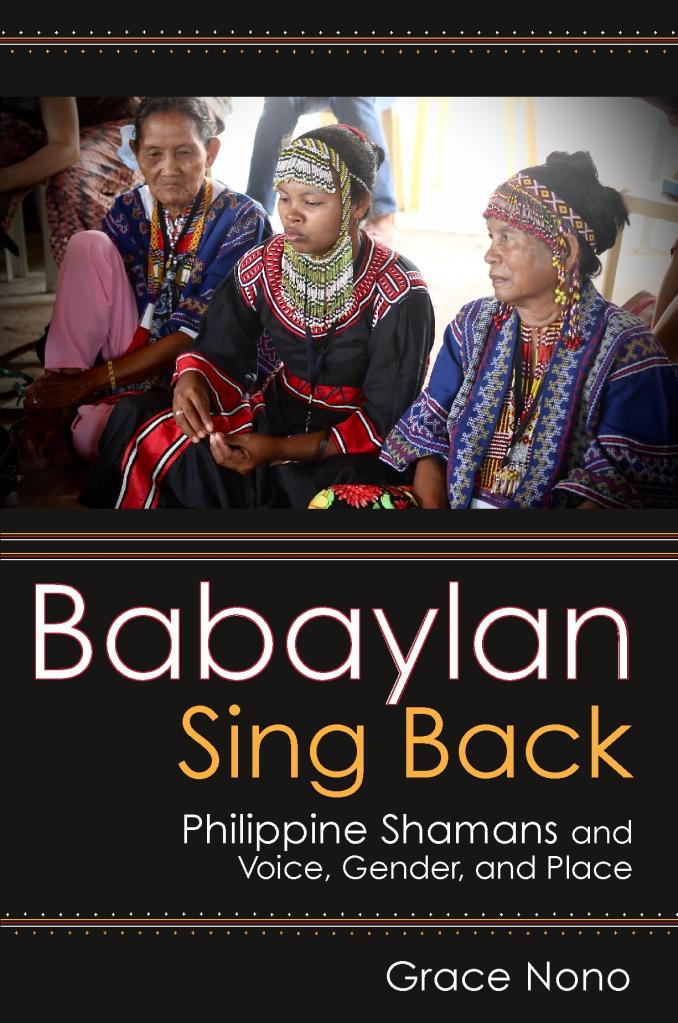
International Edition
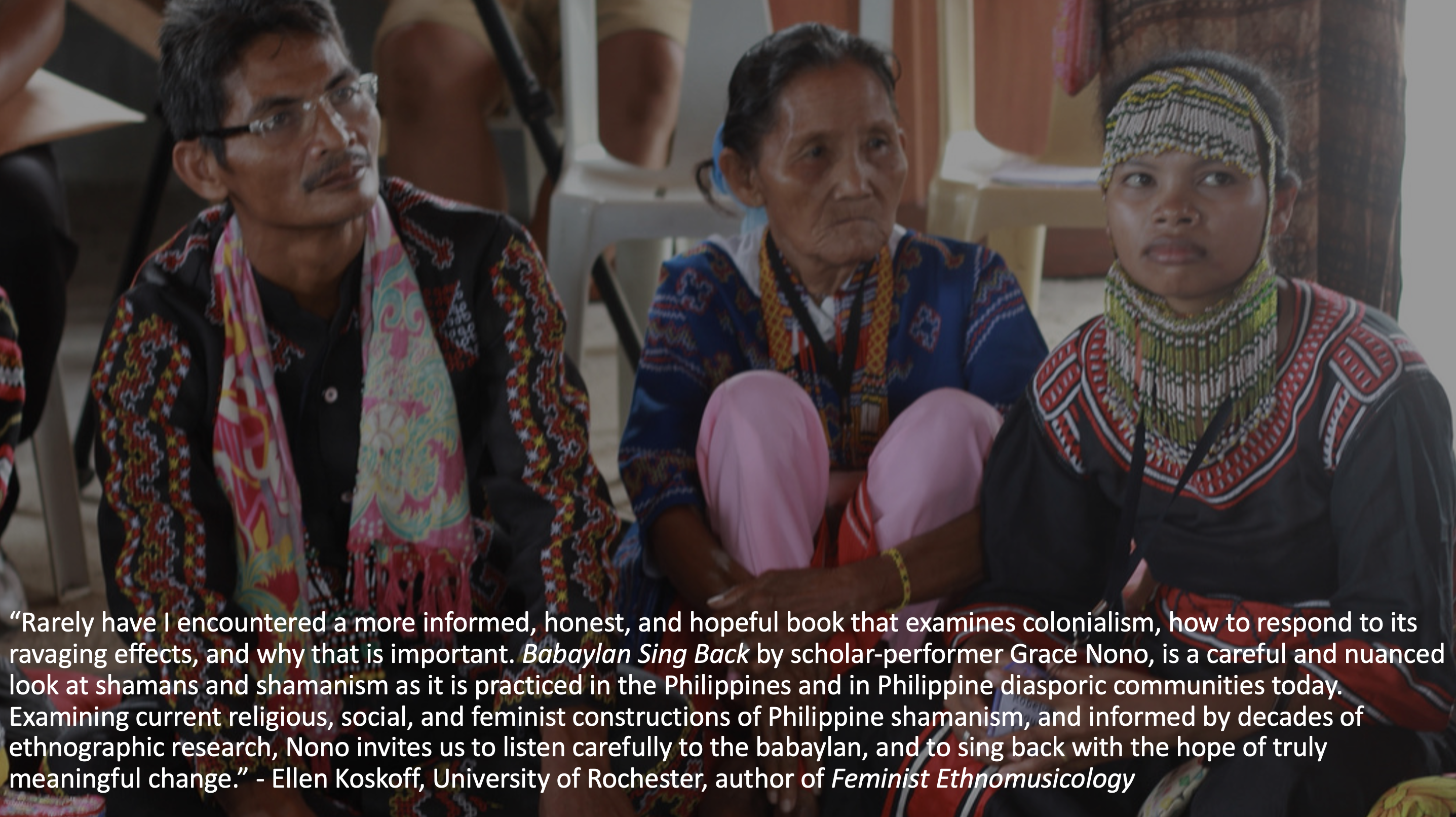
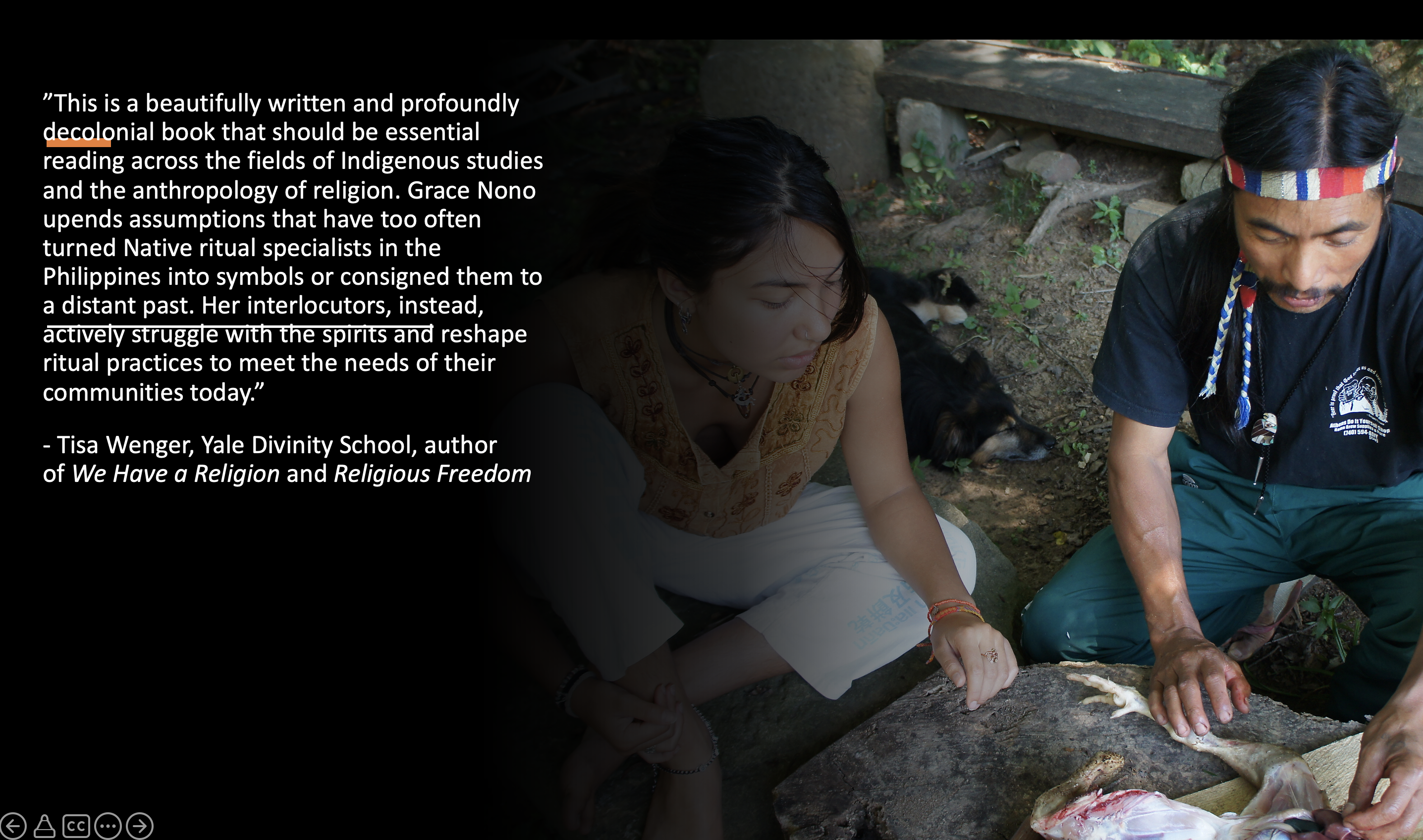
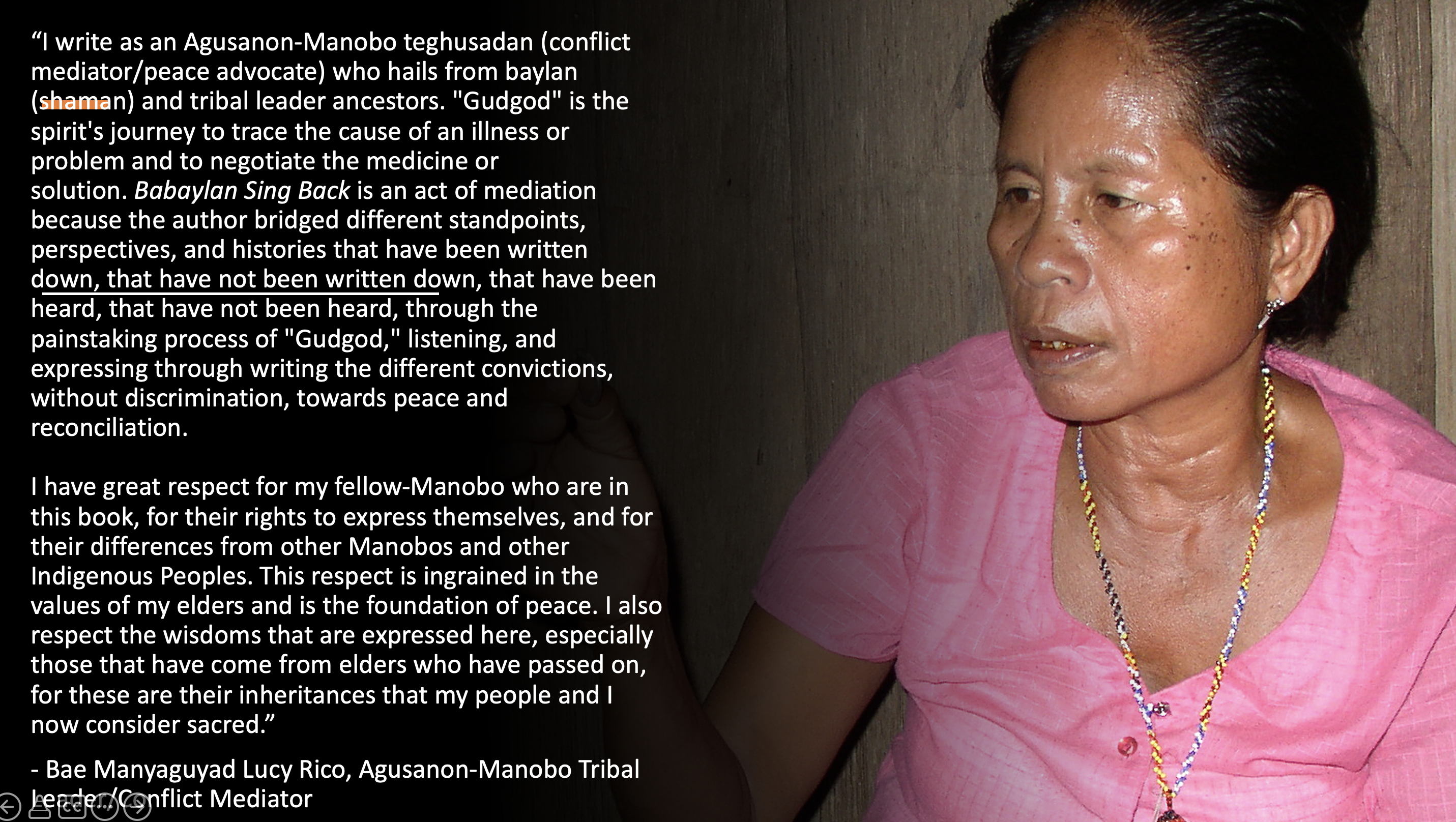
Babaylan Sing Back: Philippine Shamans and Voice, Gender, and Place
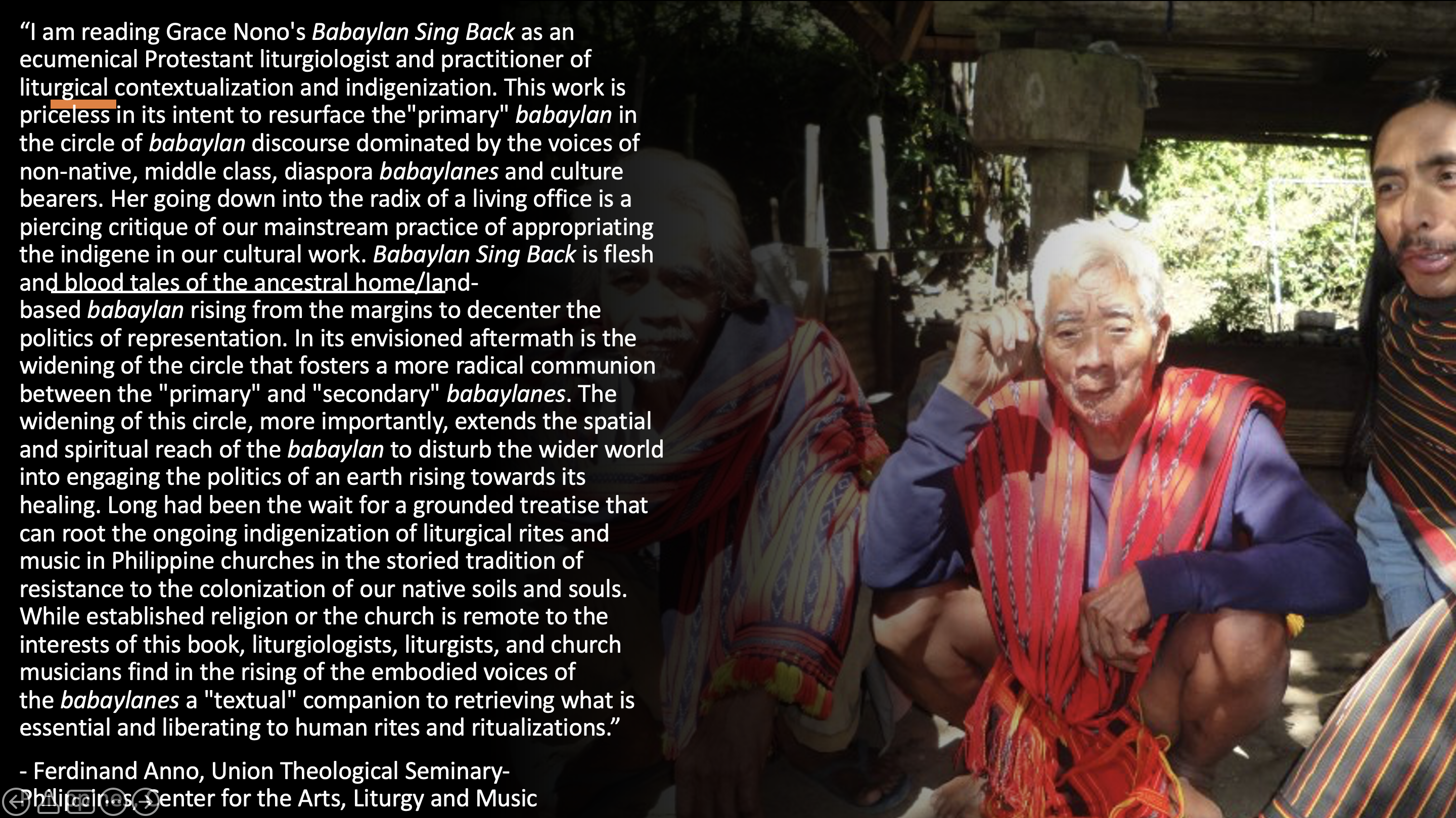
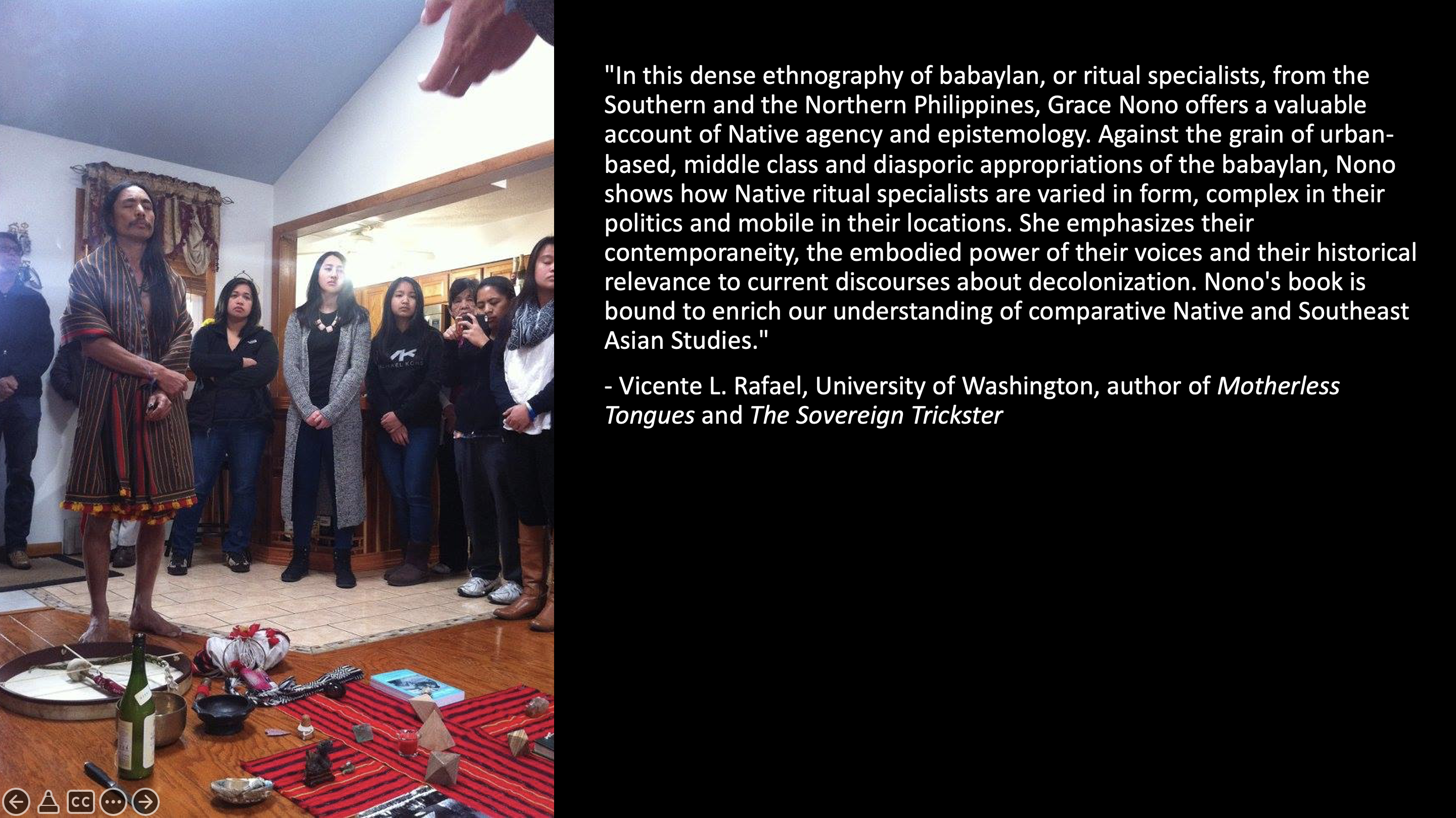
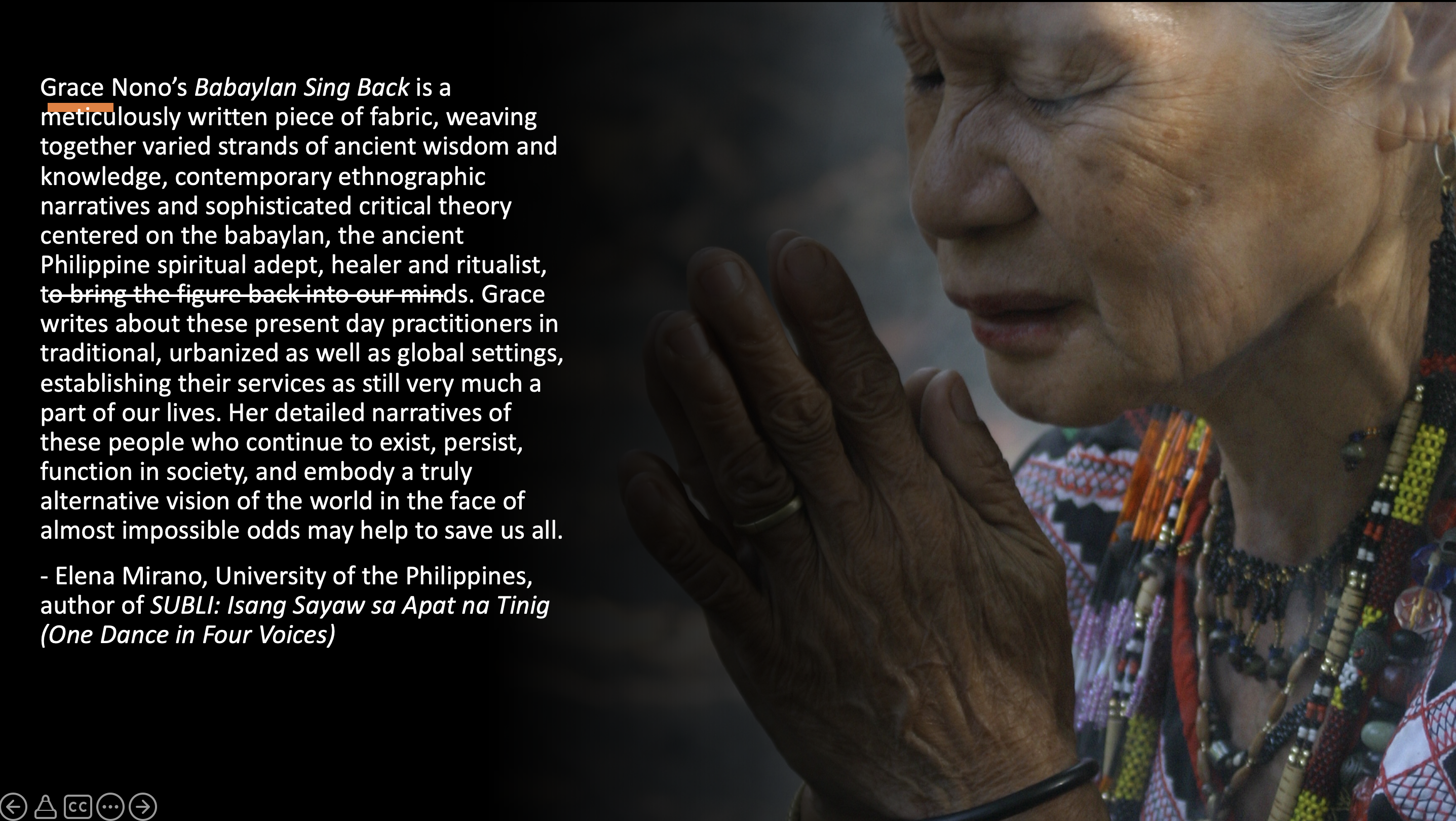
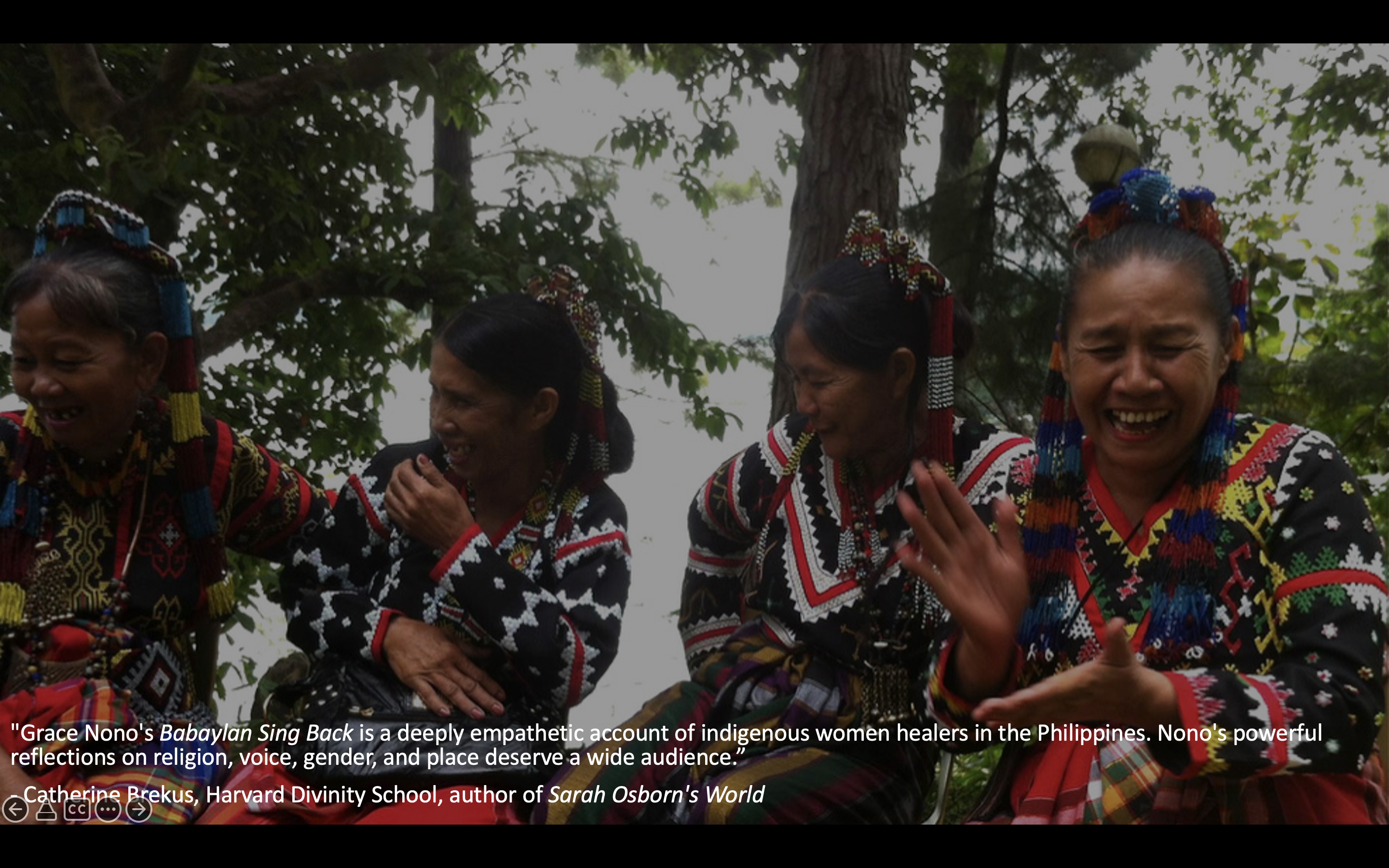
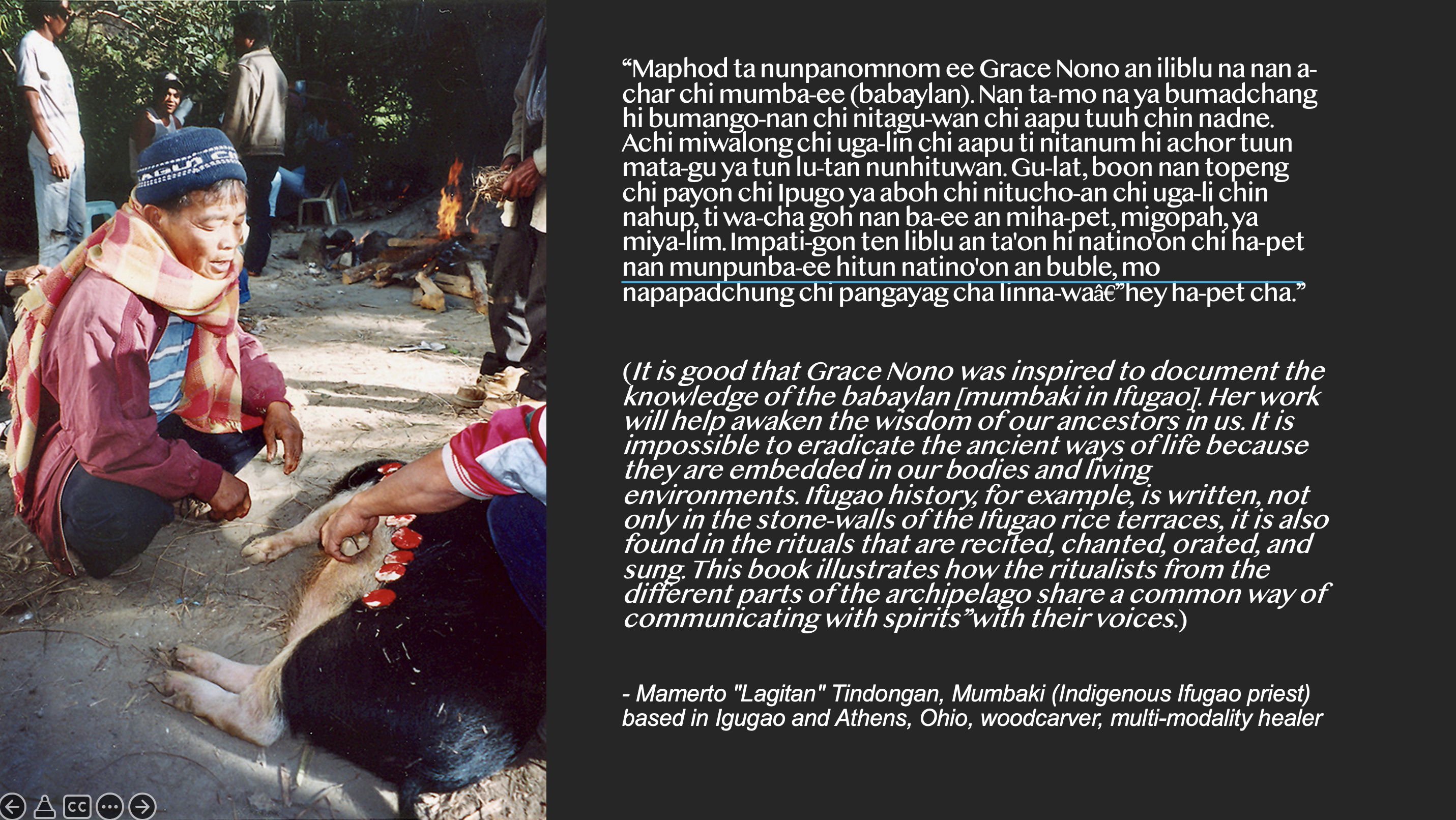
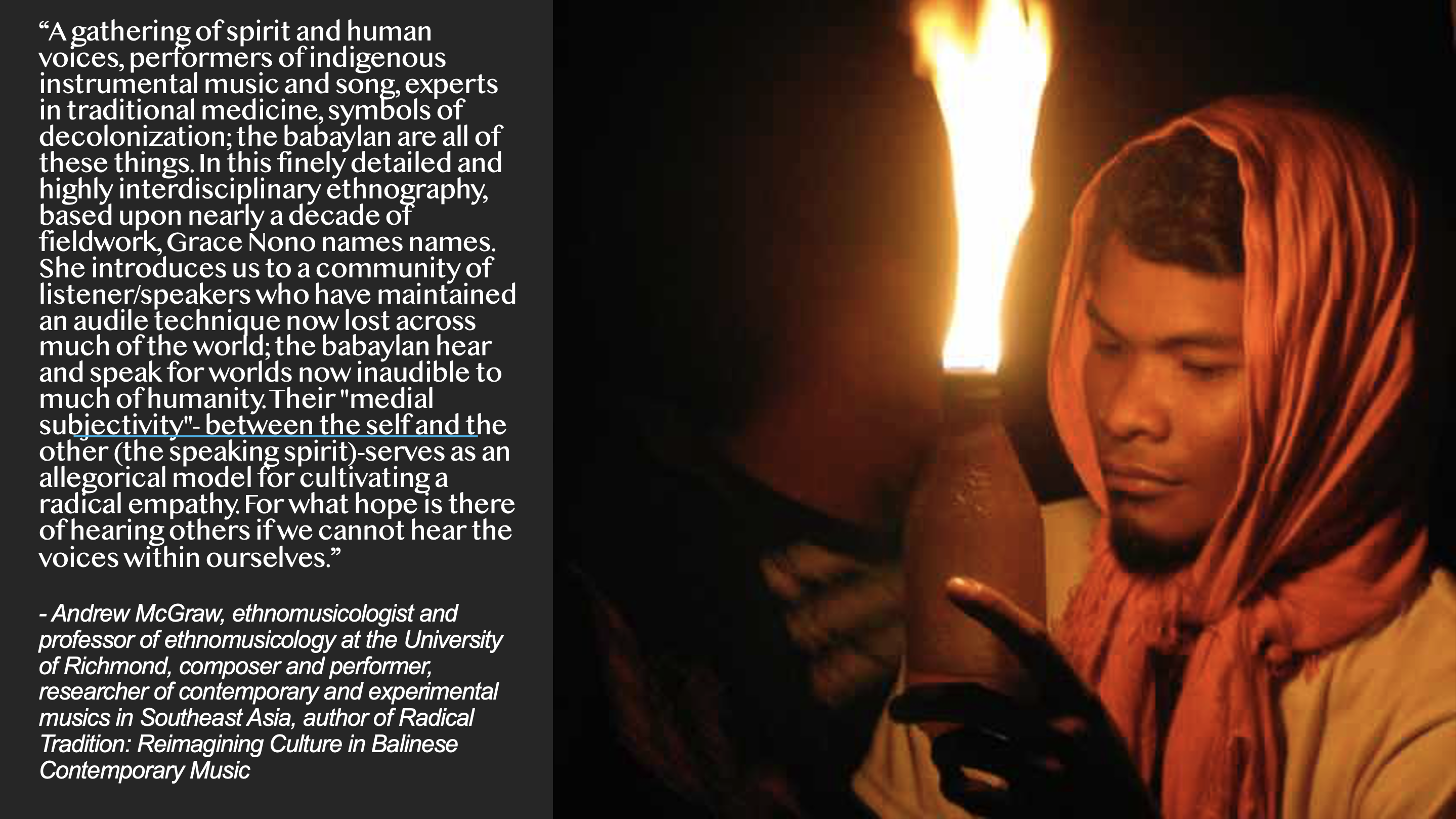
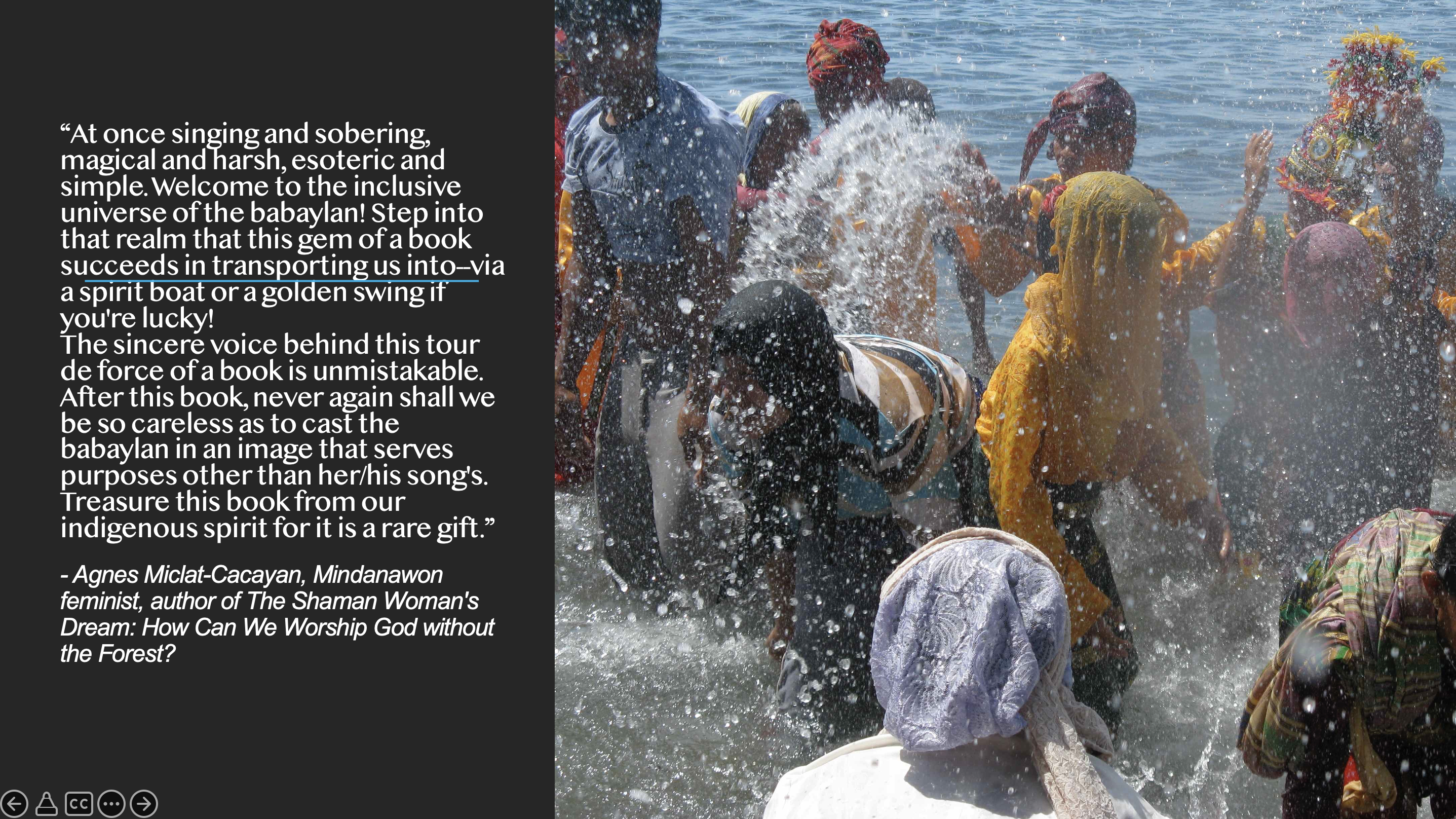
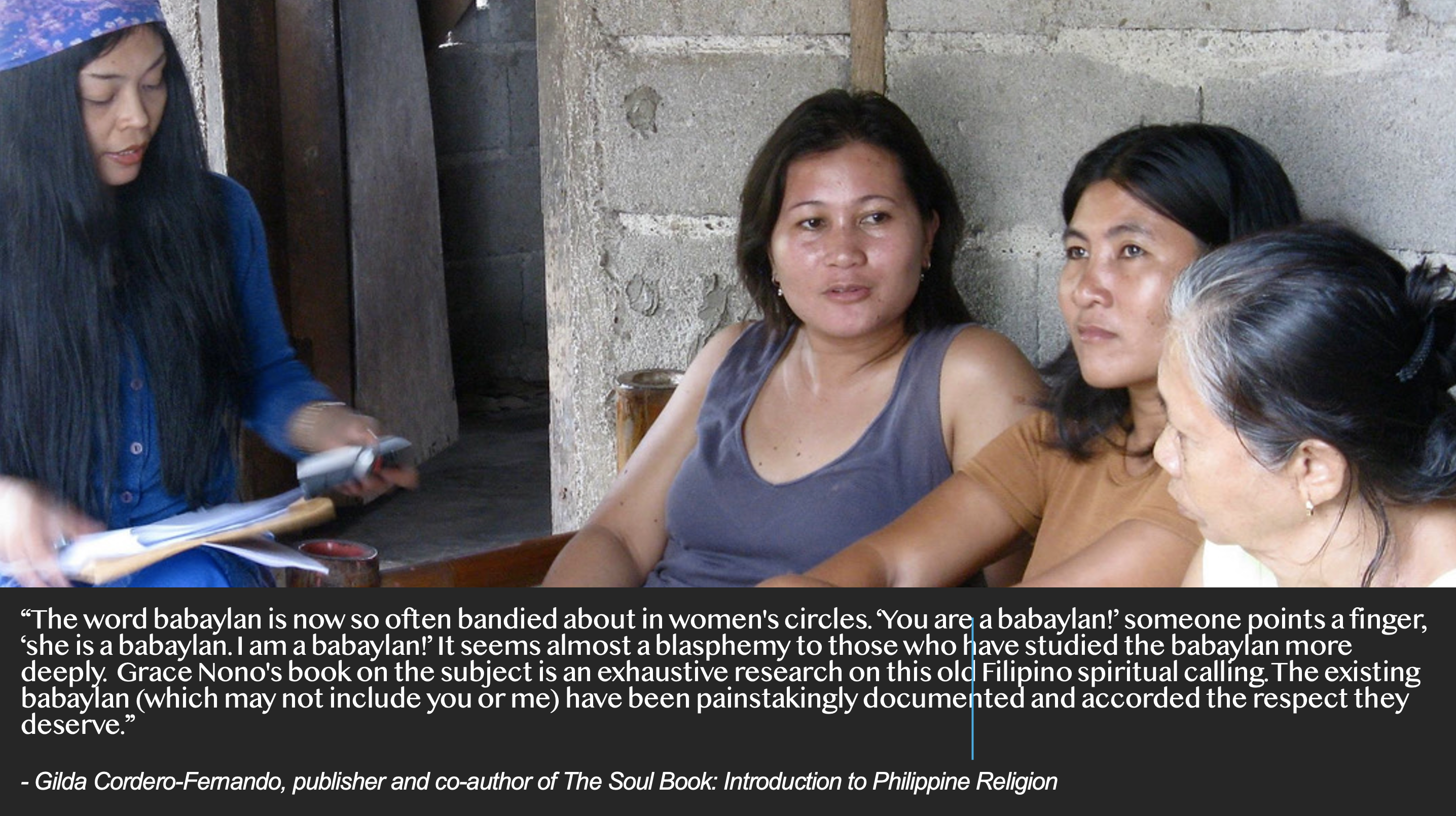
Babaylan Sing Back depicts the embodied voices of Native Philippine ritual specialists popularly known as babaylan. These ritual specialists are widely believed to have perished during colonial times, or to survive on the margins in the present-day. They are either persecuted as witches and purveyors of superstition, or valorized as symbols of gender equality and anticolonial resistance.
Drawing on fieldwork in the Philippines and in the Philippine diaspora, Grace Nono’s deep engagement with the song and speech of a number of living ritual specialists demonstrates Native historical agency in the 500th year anniversary of the contact between the people of the Philippine Islands and the European colonizers.

Philippine Edition




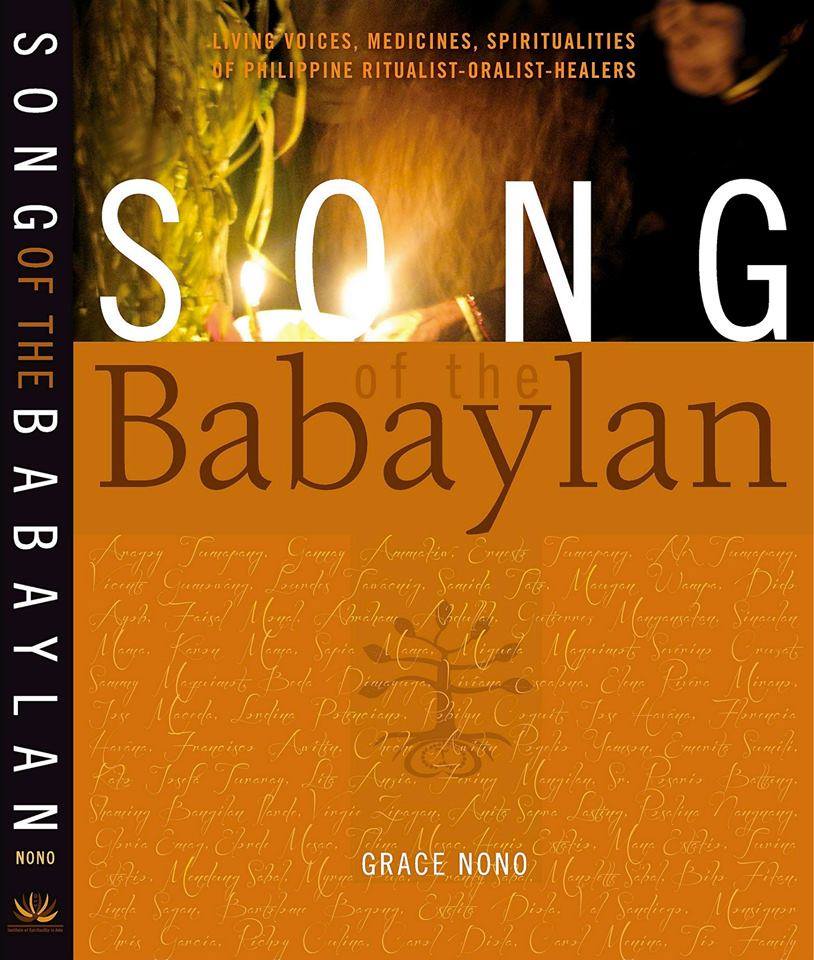
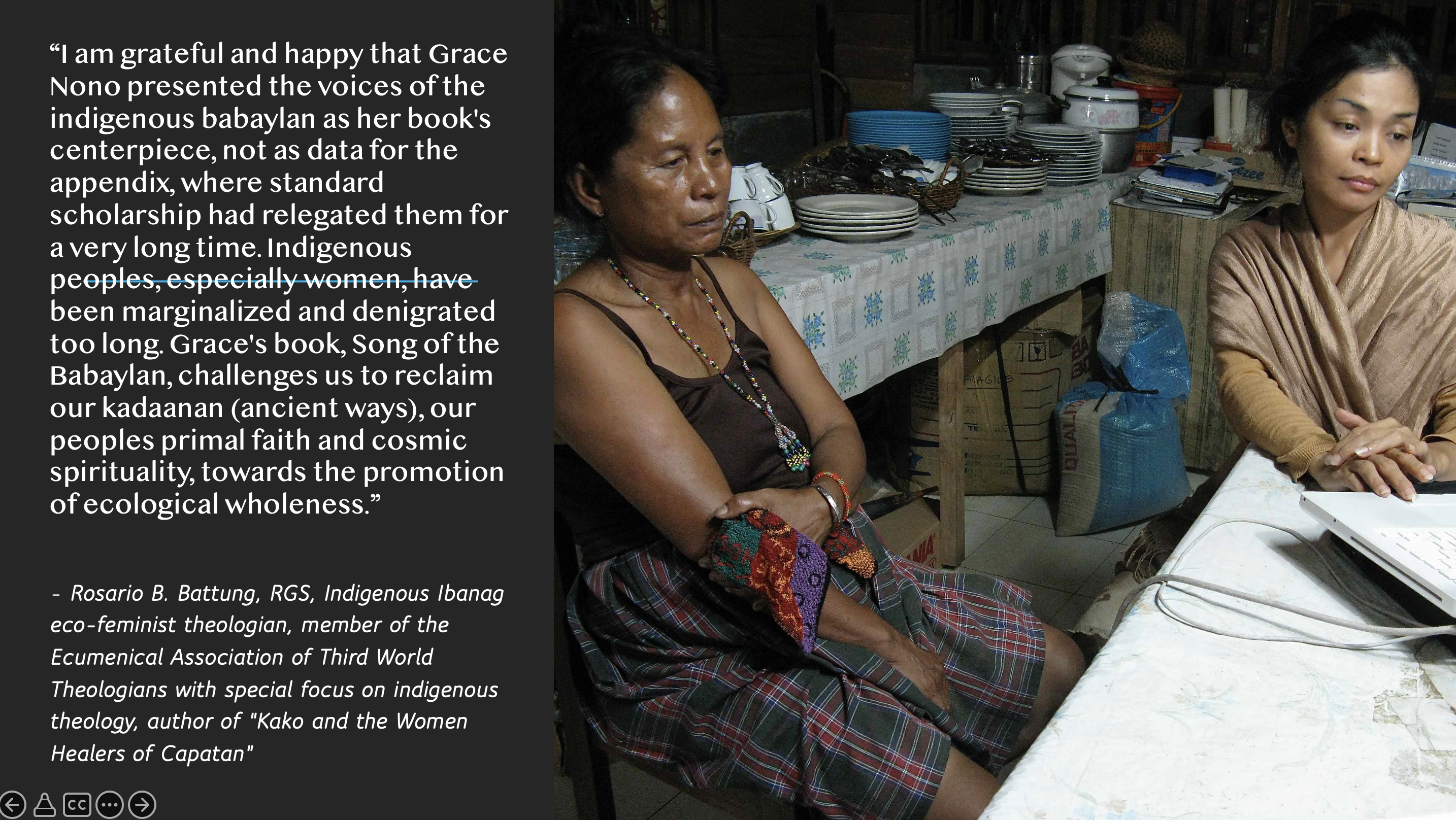
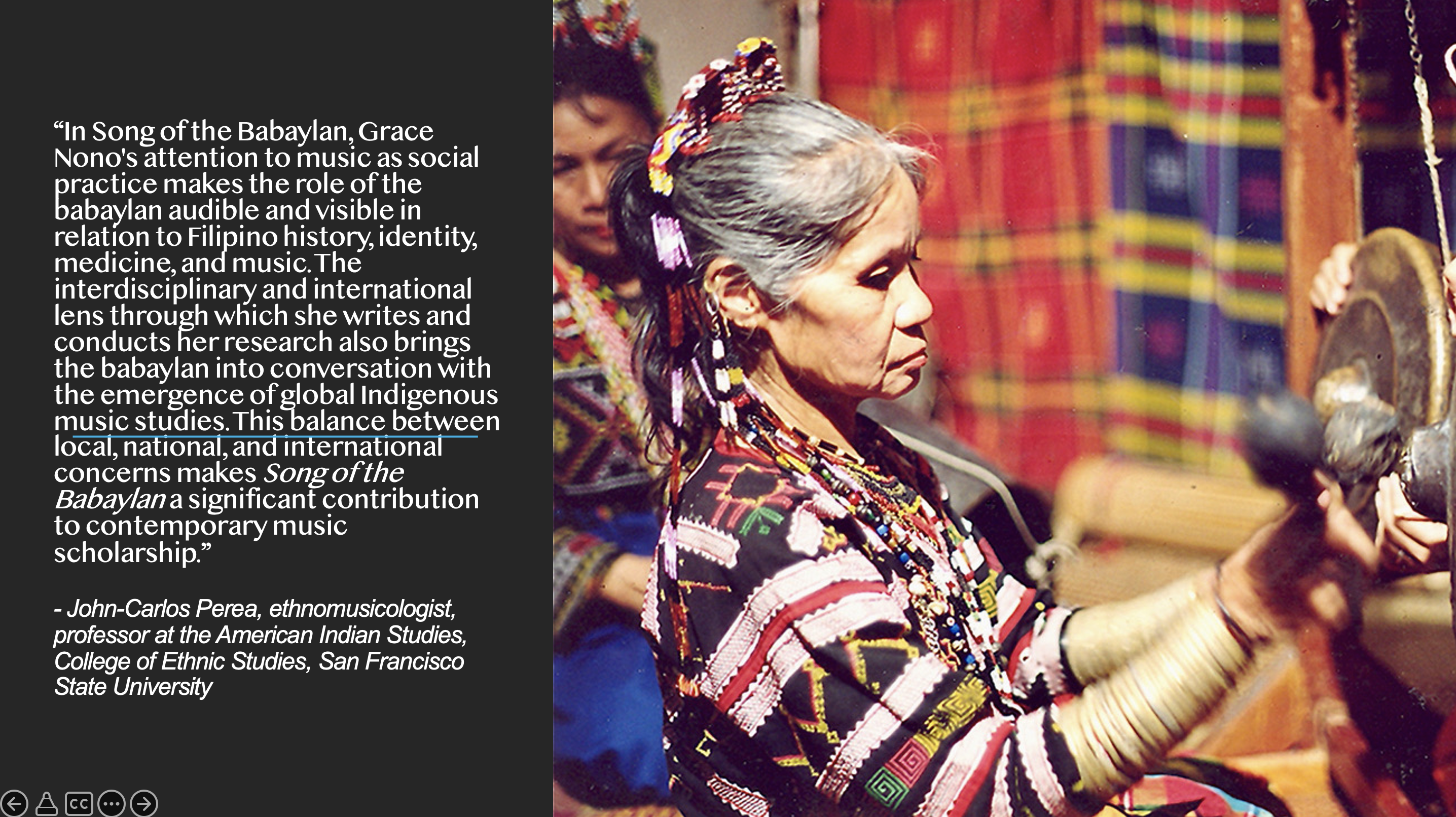
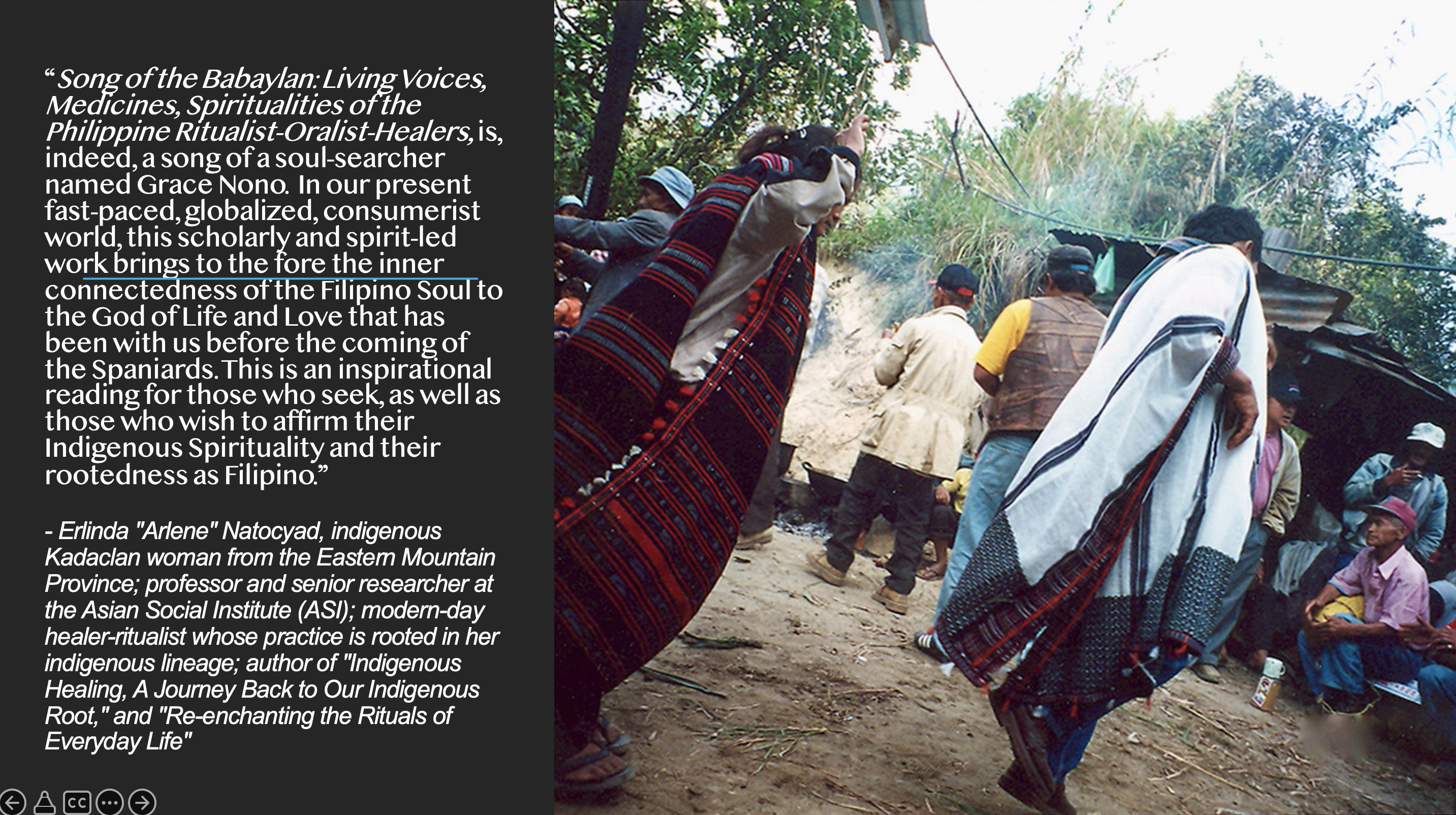
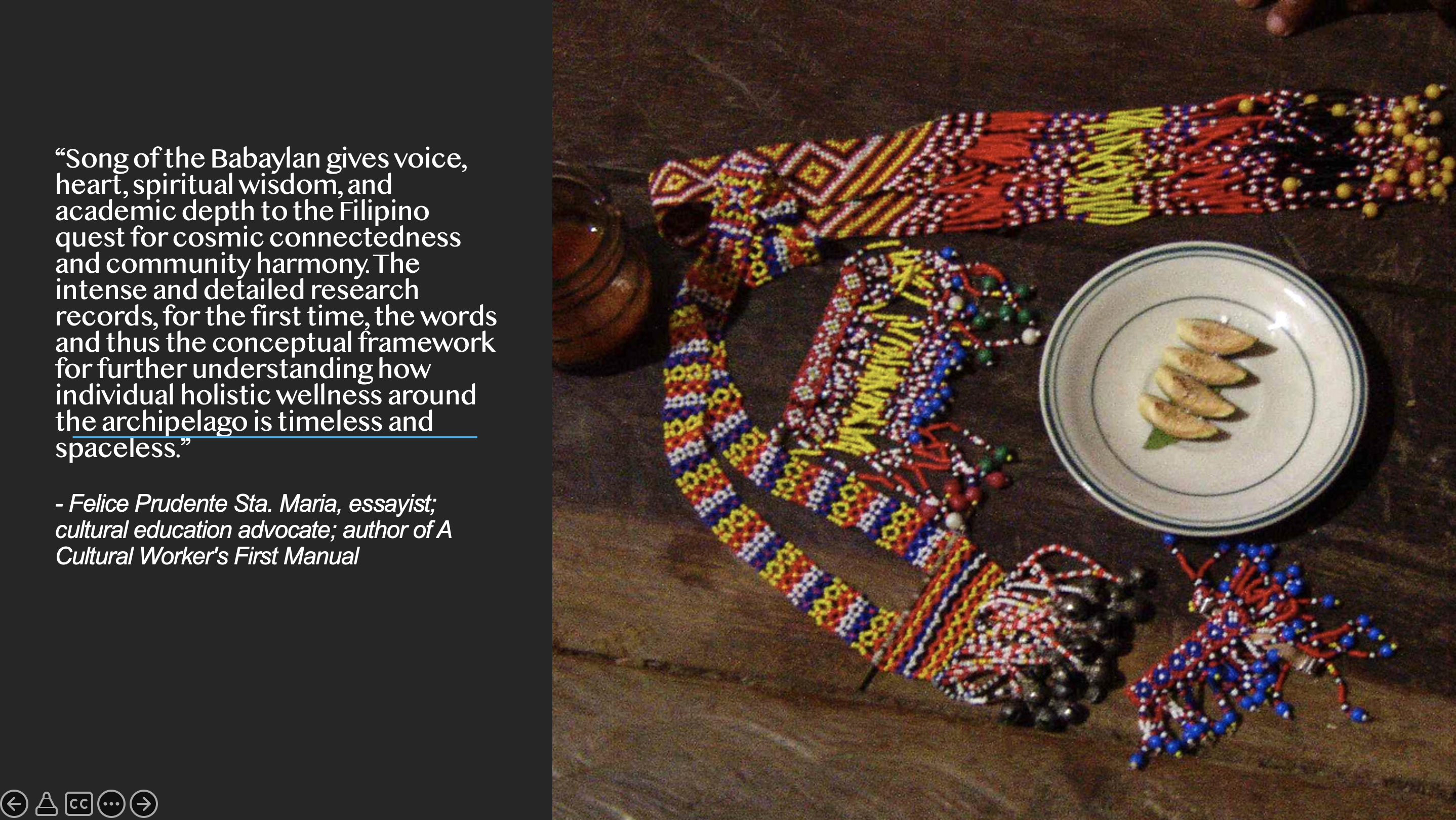
Song of the Babaylan: Living Voices, Medicines, Spiritualities of Philippine Ritualist-Oralist-Healers
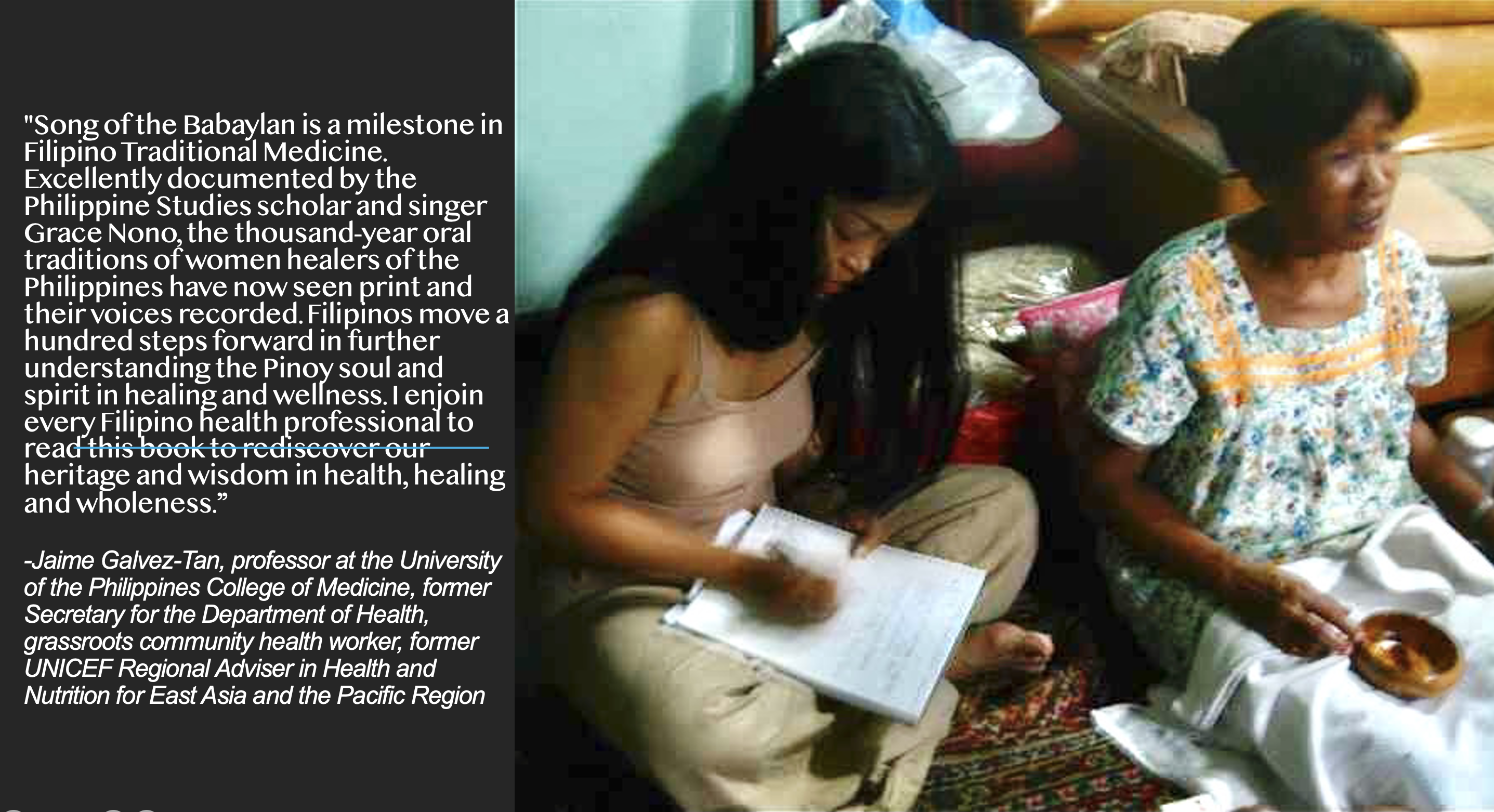
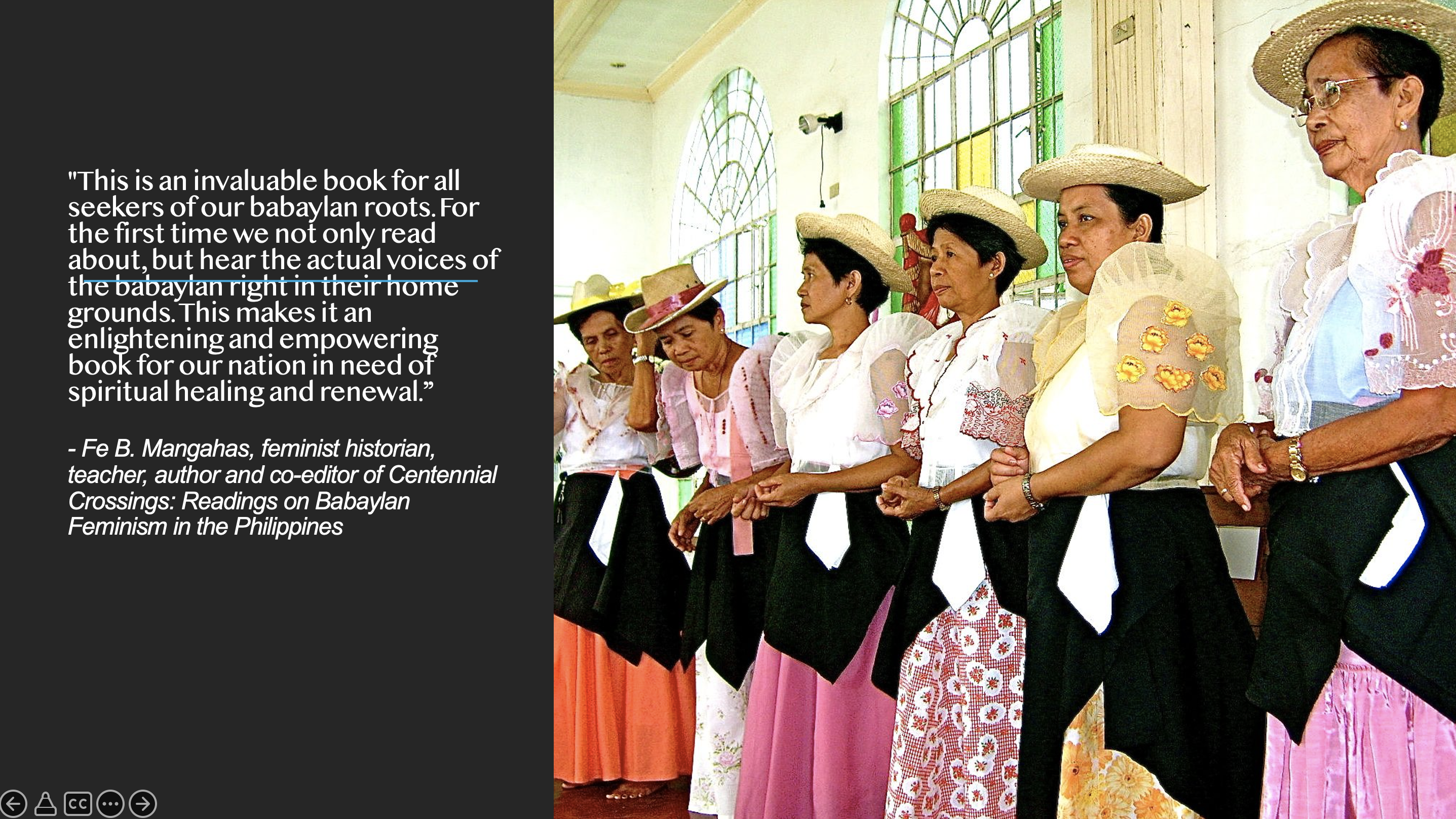
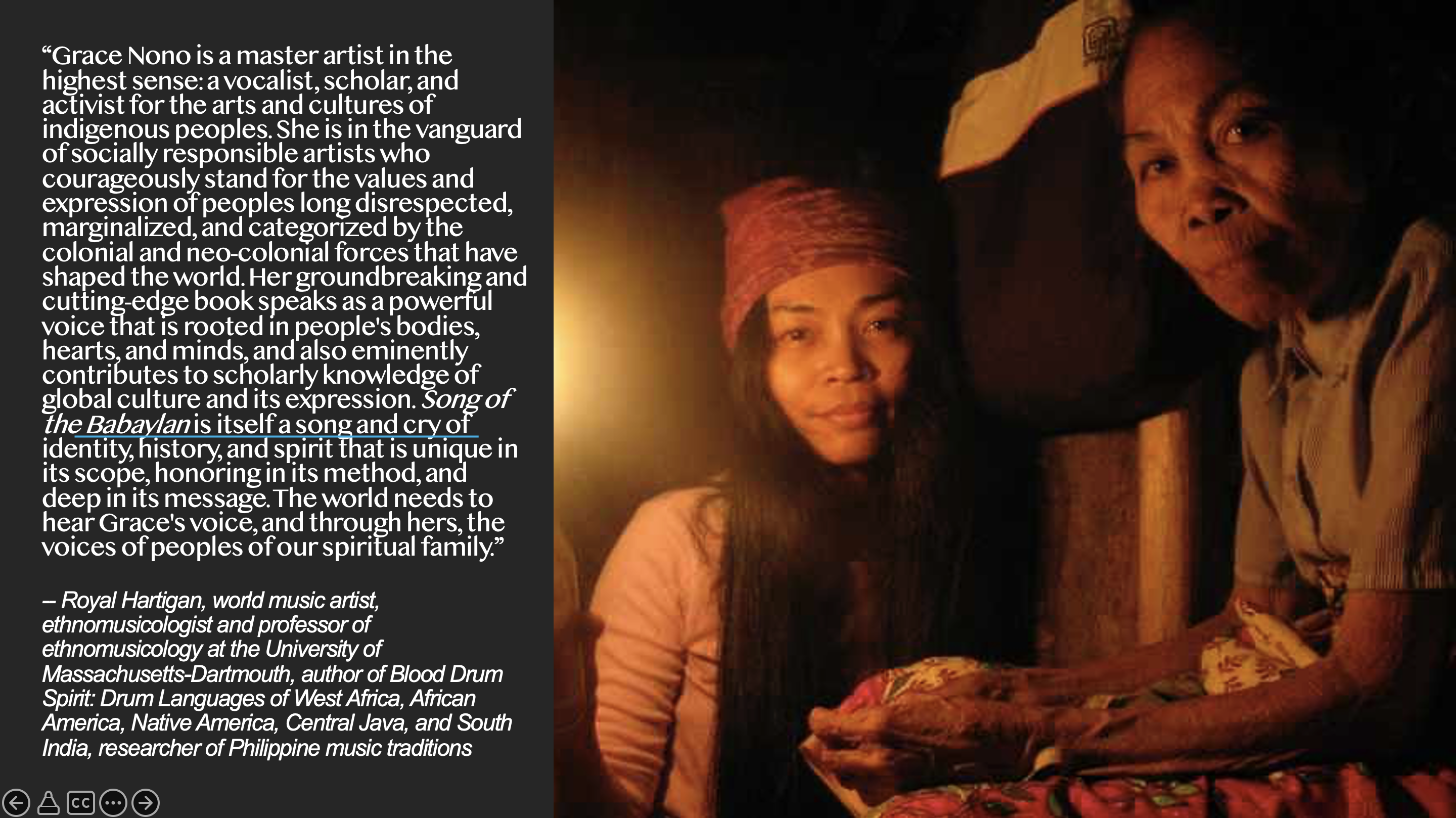
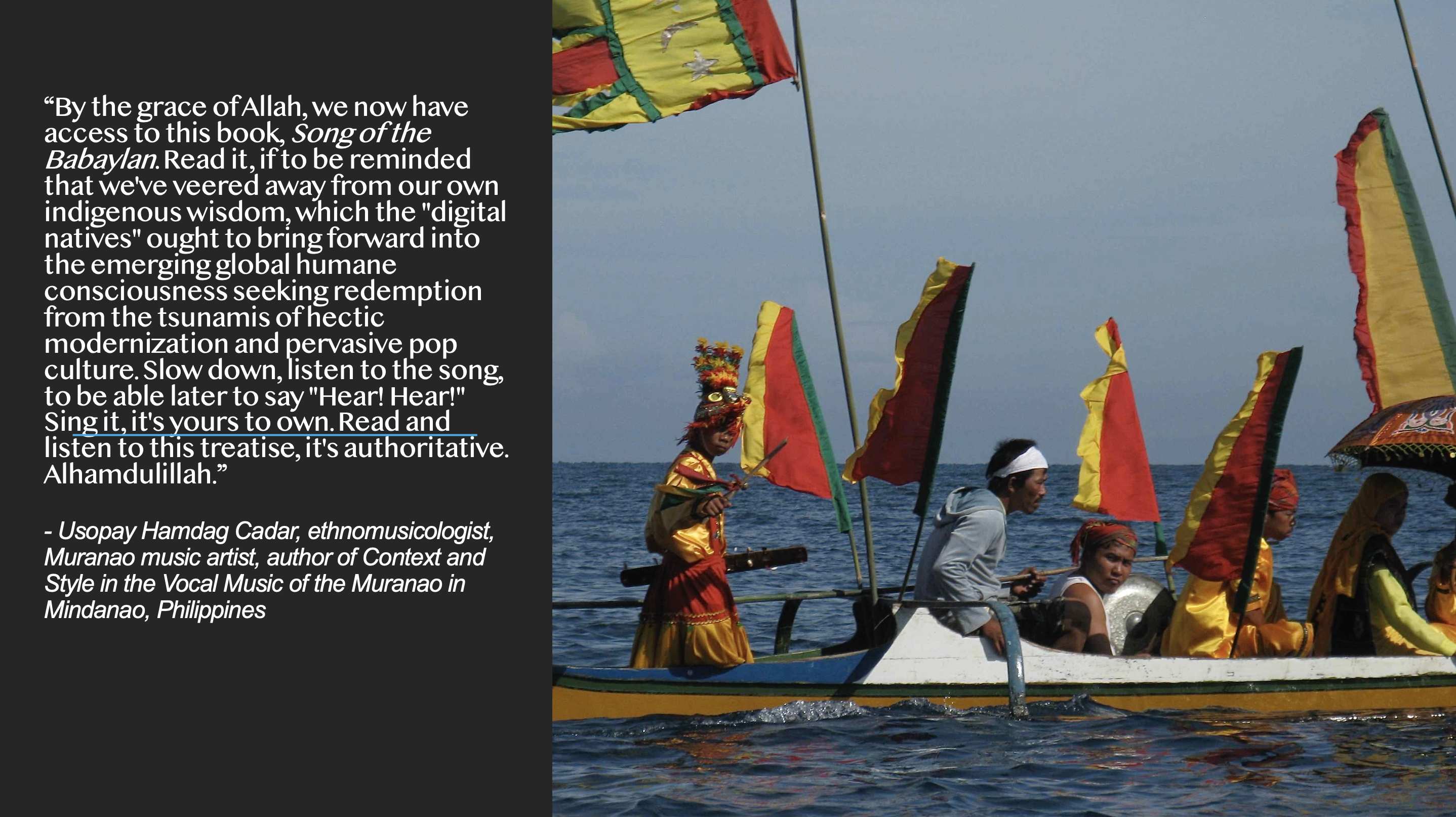
Responding to claims that Philippine ritualists-oralist-healers popularly referred to as “babaylan” were eliminated by the histories of Spanish and American colonizations, Song of the Babaylan: Living Voices, Medicines, Spiritualities of Philippine Ritualist-Oralist-Healers (Institute of Spirituality in Asia, 2013) shows us that these continue to exist in the present time, as testified, among others, by their songs, rituals, and healings that continue to be practiced today.
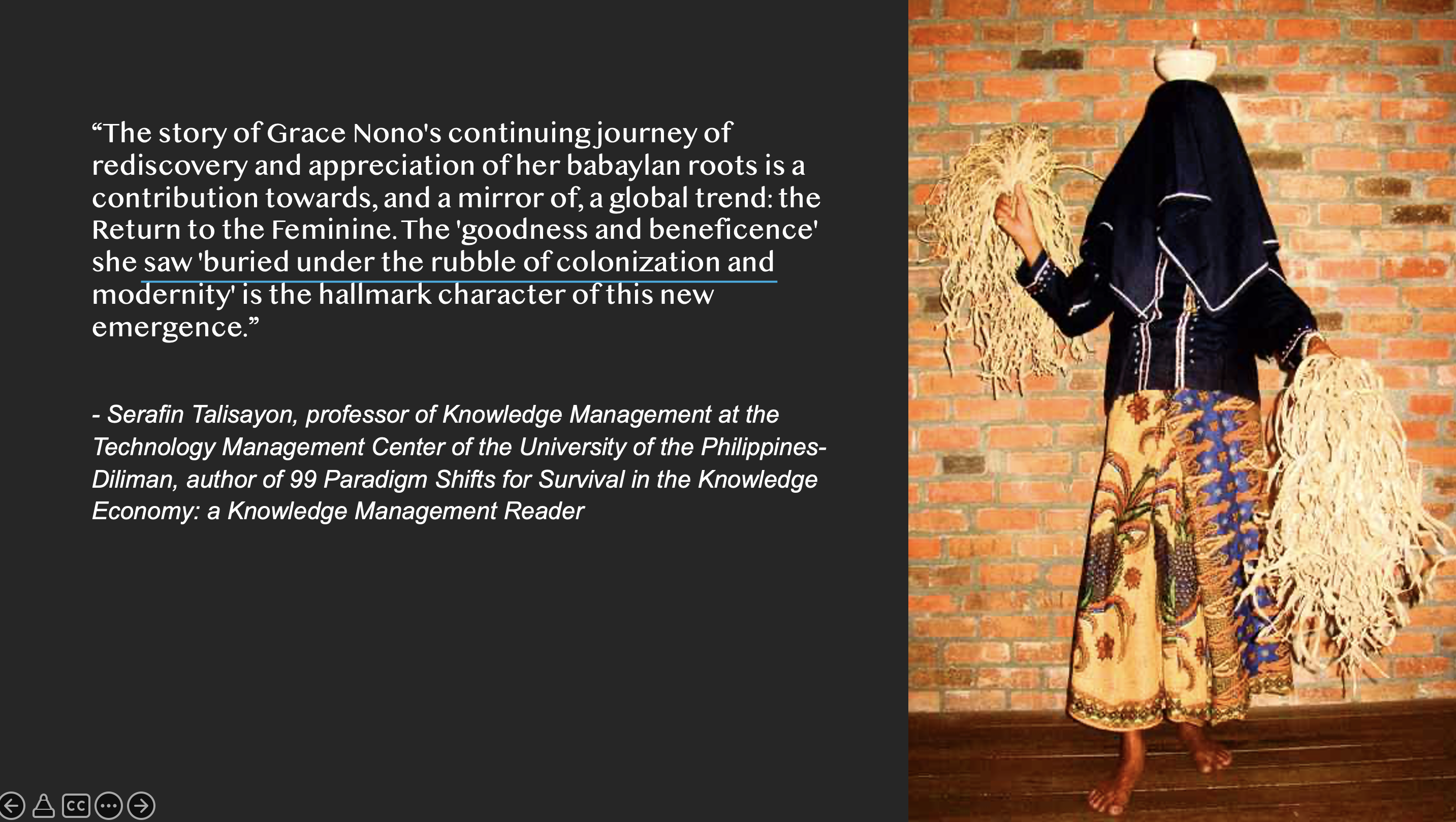
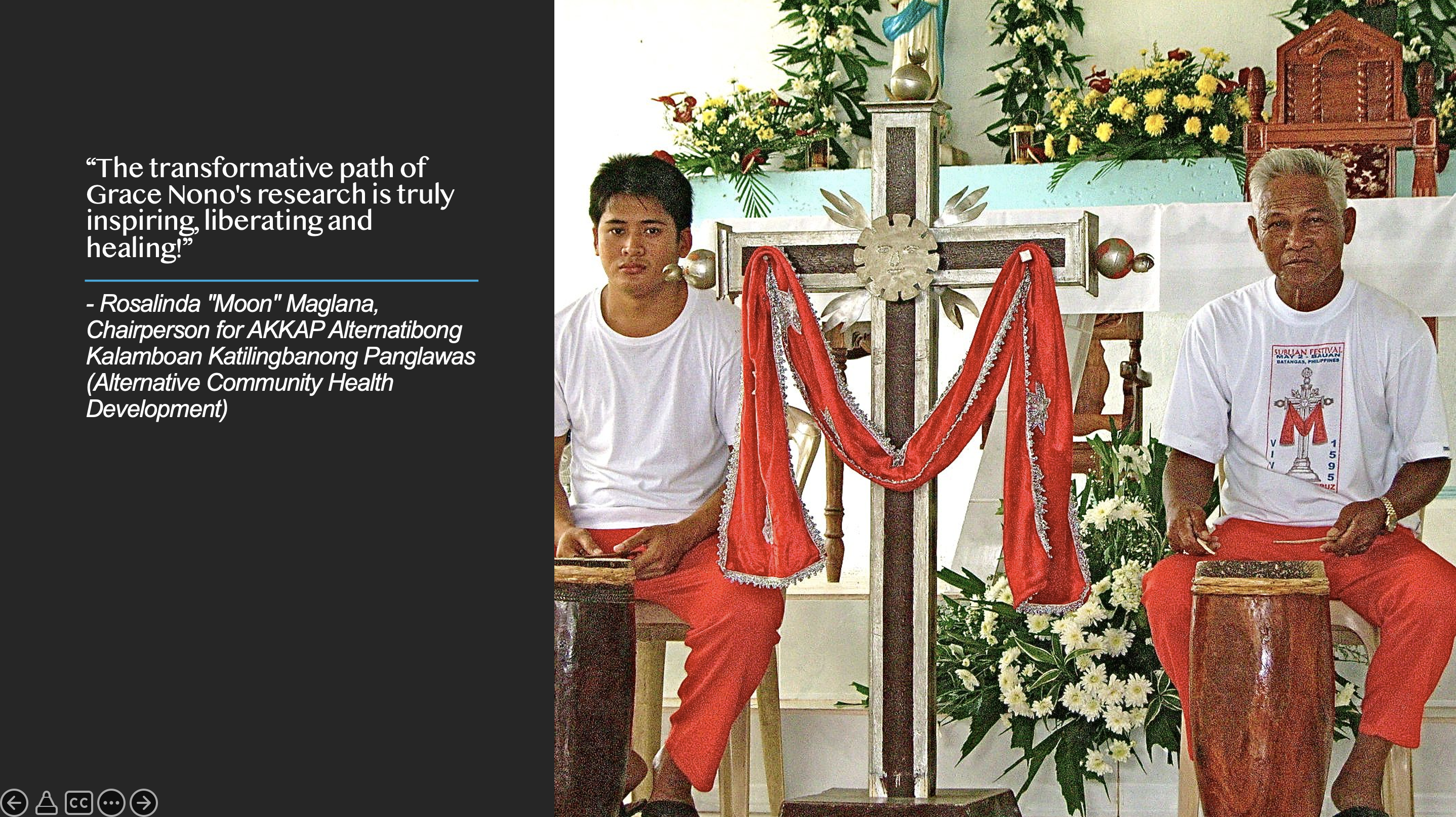
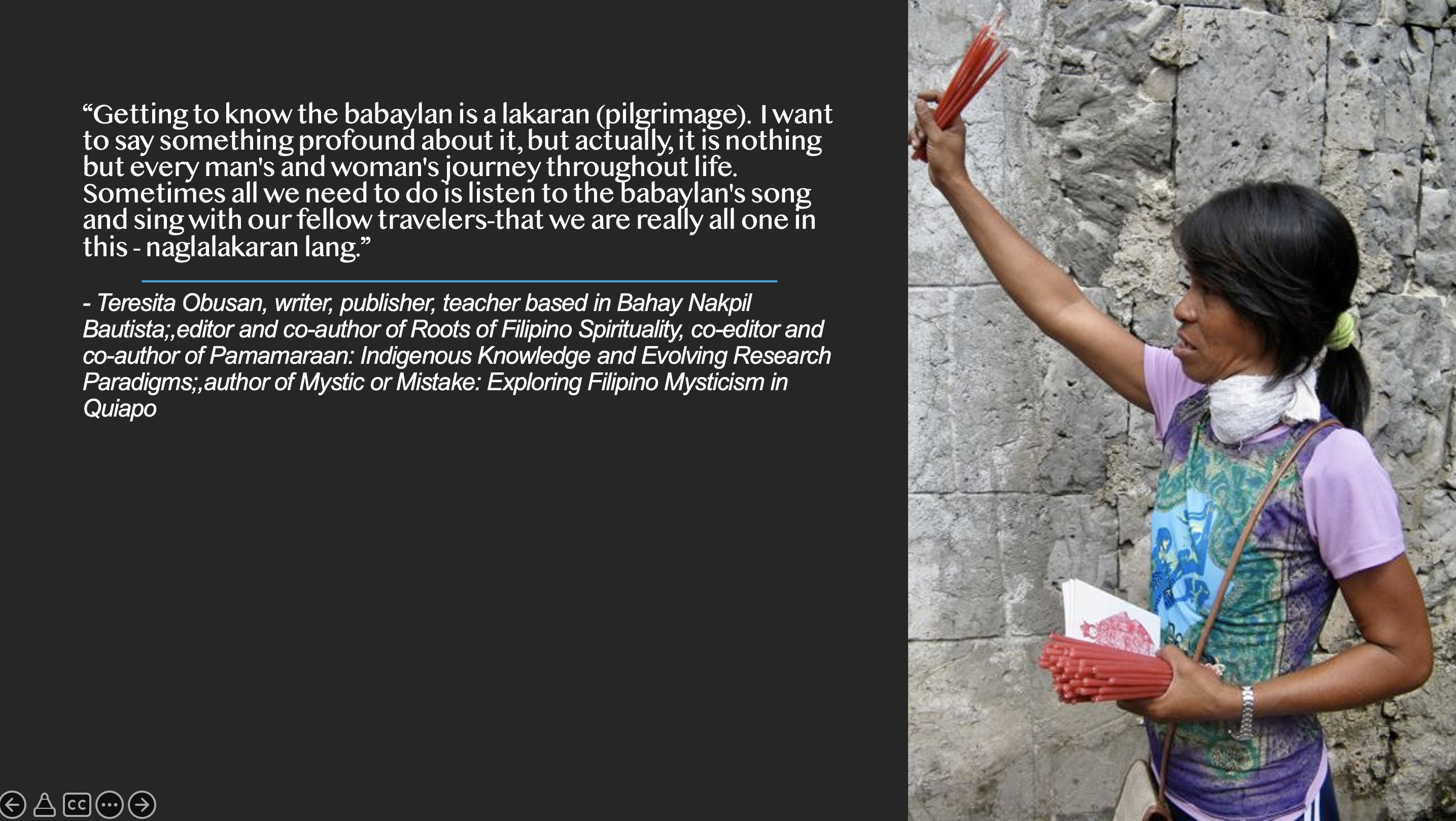
Based on over eight years of research with various Philippine ritualists-oralist-healers and people they work closely with, the book details the lives and practices of a mangilu in Tuguegarao, an andadawak in Kalinga, a mambunong in Benguet, a subli matremayo in Batangas, a babalyan in Palawan, a maninuog in Cebu, a mamuhat-buhat in Camiguin, a baylan in Agusan, a patutunong in Maguindanao, and a tau m’ton bu in South Cotabato, Philippines. It presents ritual ethnographies, babaylan stories and conversations, oral chant recordings, and discussions relevant to issues in indigenous studies, religious studies, gender studies, and ethnomusicology.
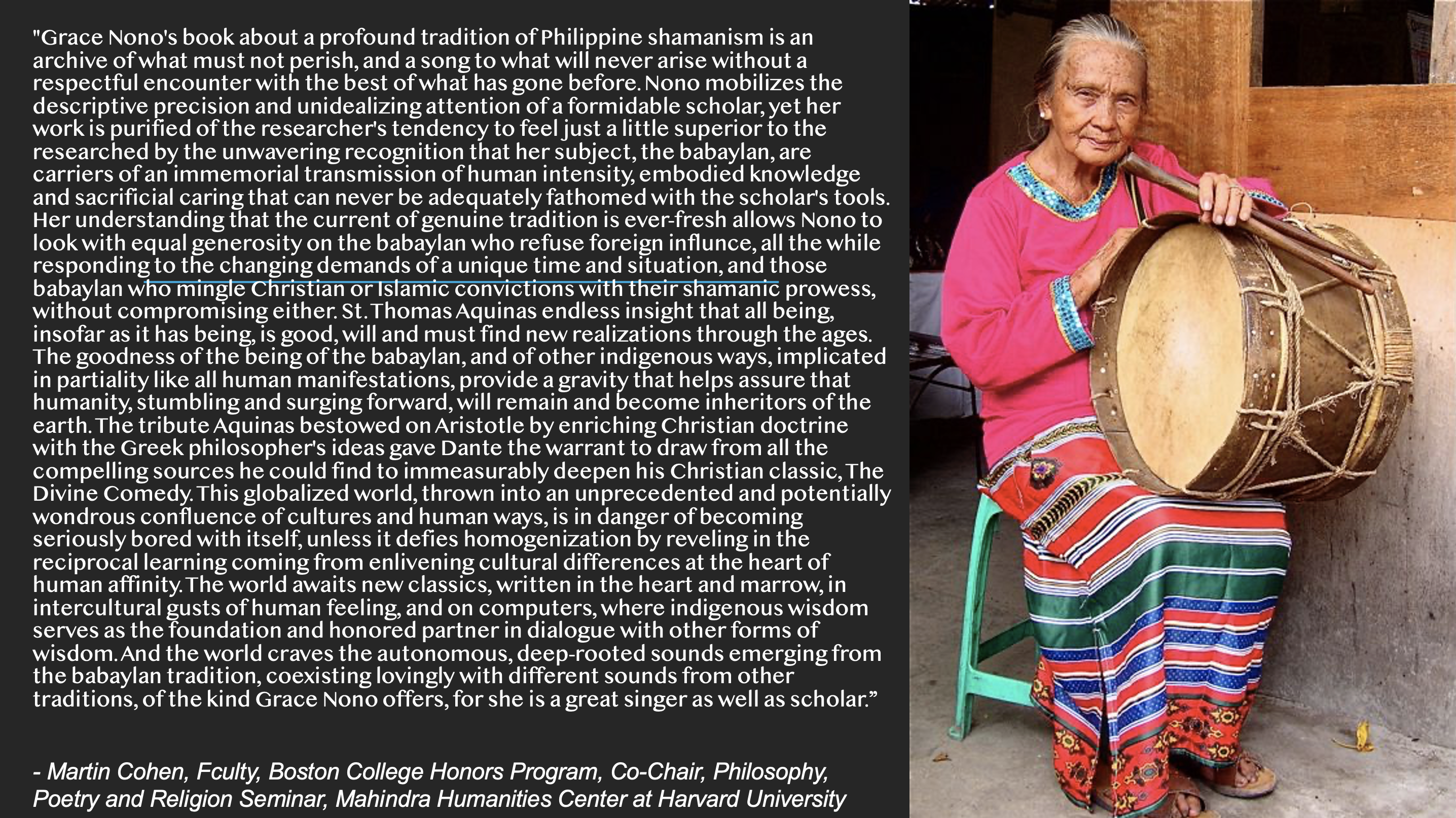
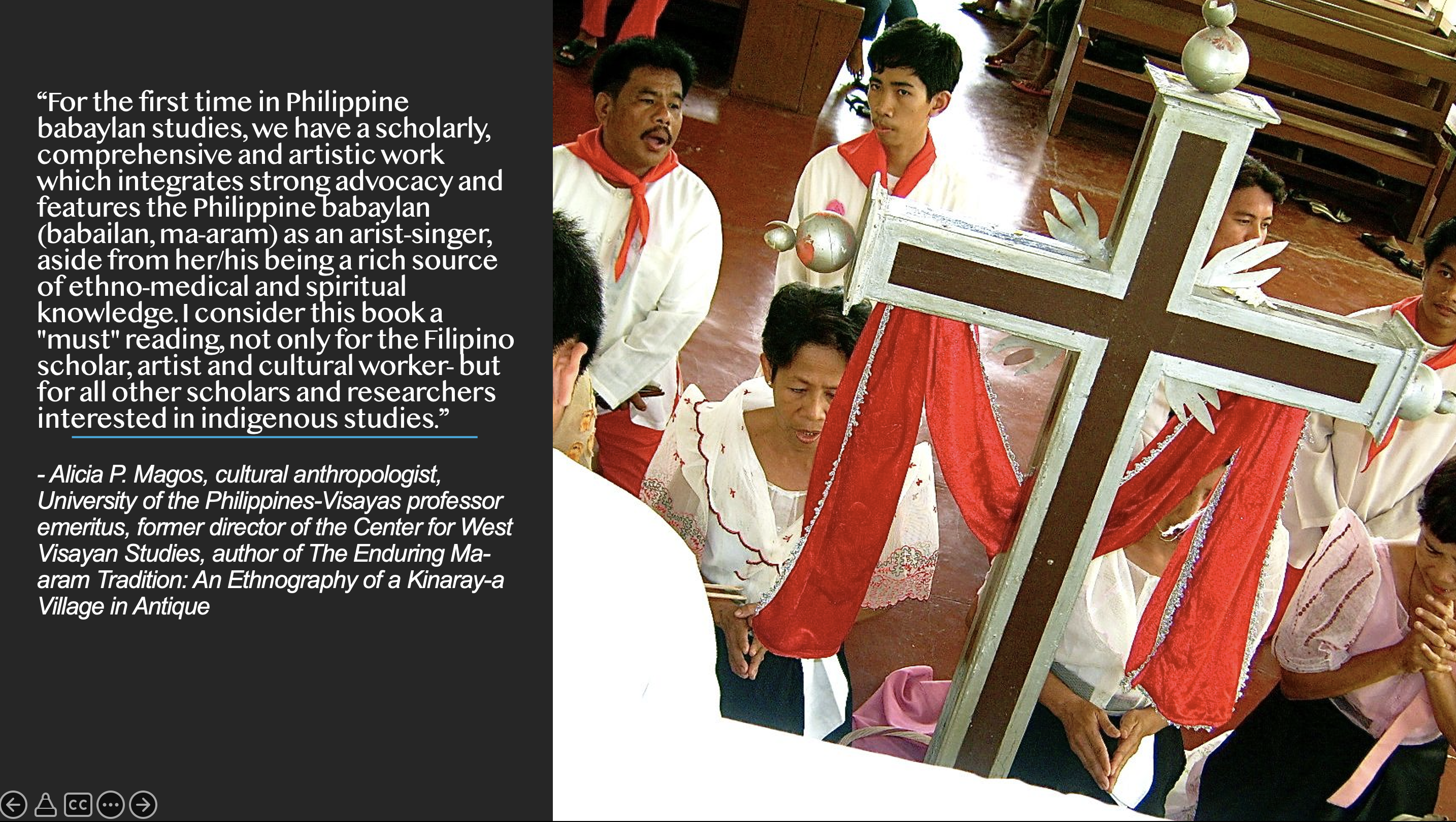
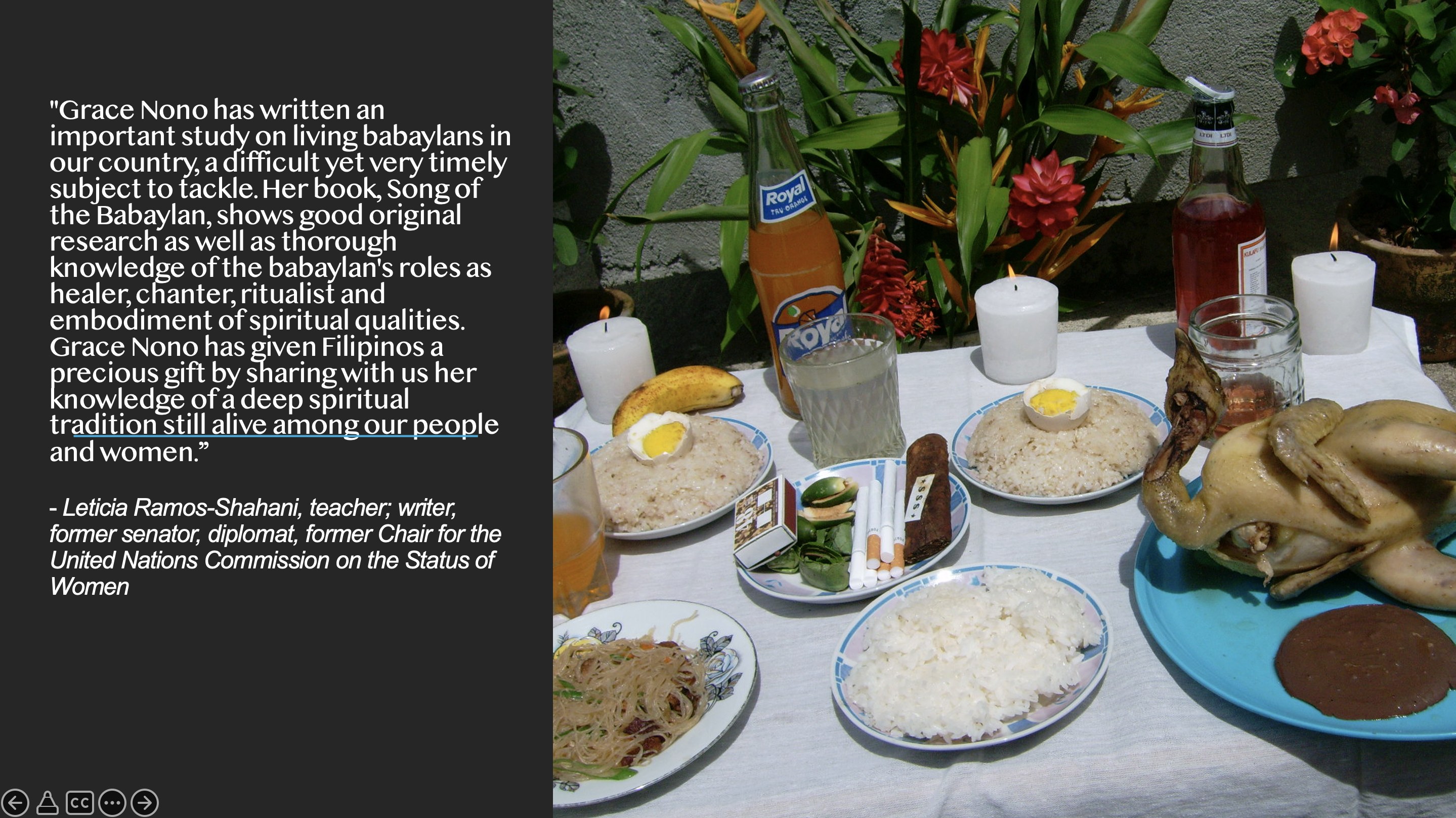




The Shared Voice: Chanted and Spoken Narratives from the Philippines
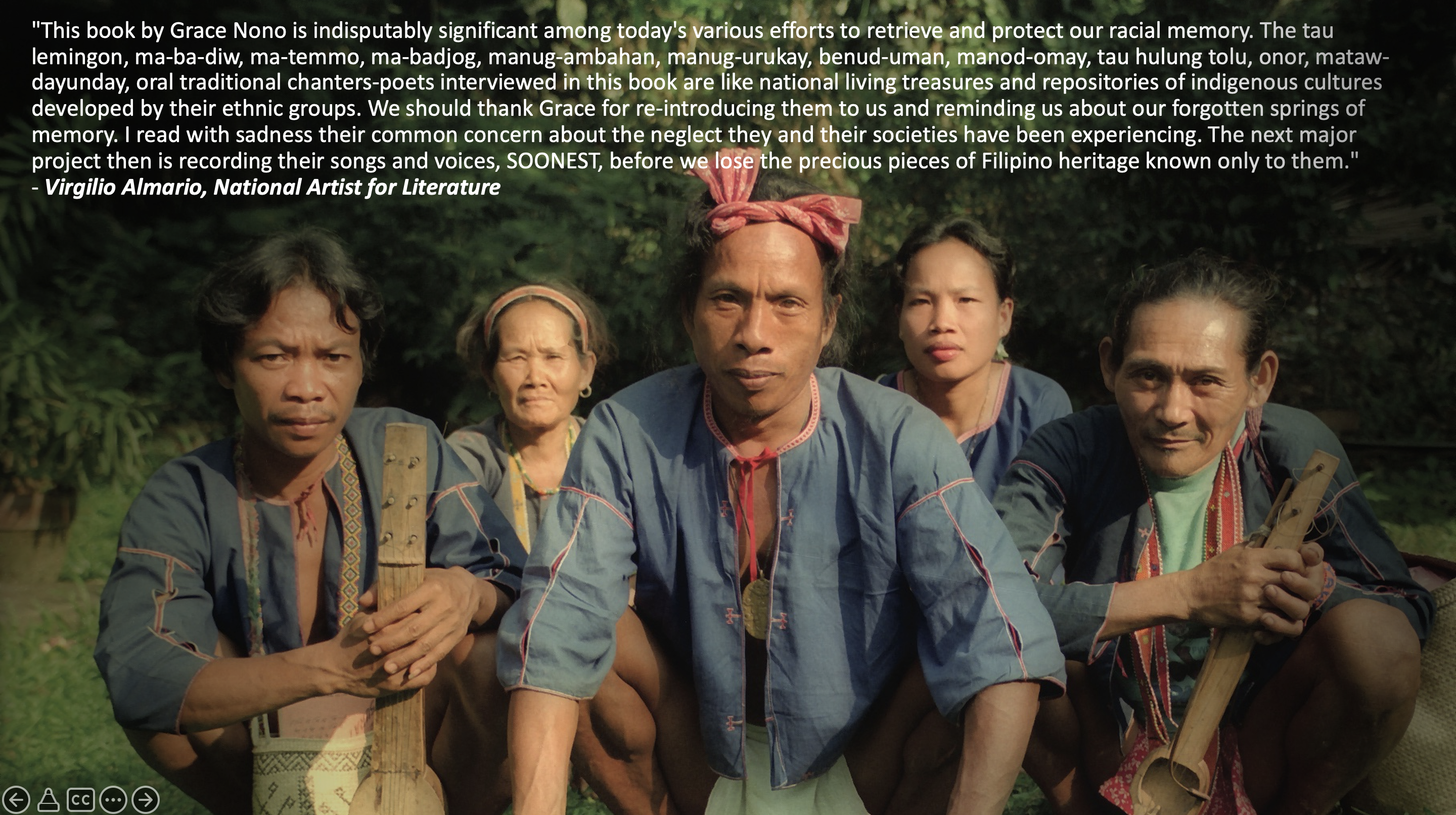
The Shared Voice is the fruit of many years of interaction with a number of Philippine oral singers: a tau lemingon from South Cotabato, a ma-ba-diw from Benguet, an ambahan chanter from Mindoro, a benud-uman/manod-omay from Agusan, a darangen chanter from Marawi, a dayunday singer from Maguindanao, a mang-aawit from Batangas, and others, besides. The book discusses Philippine oral traditions from the performers’ standpoints.
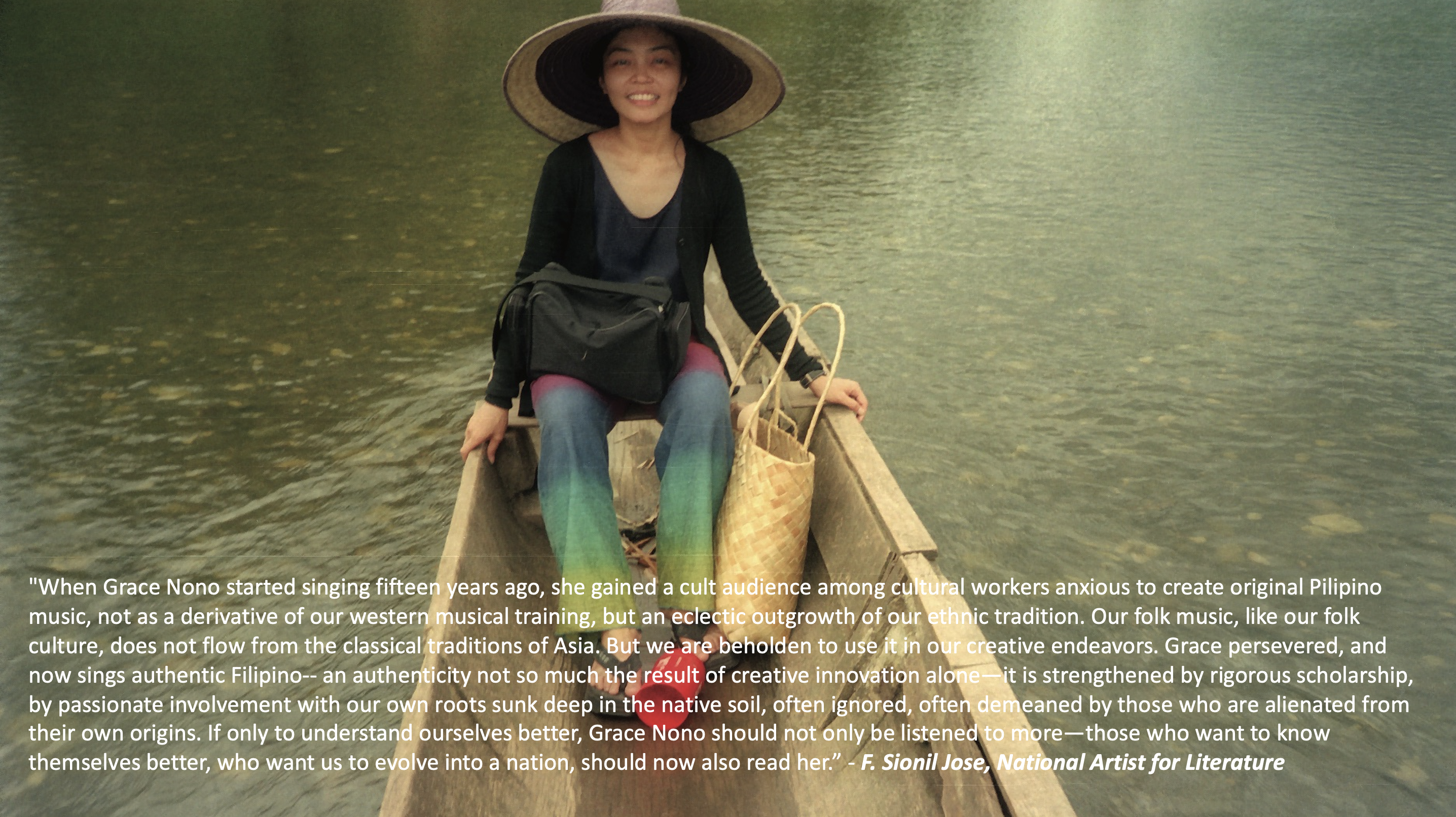
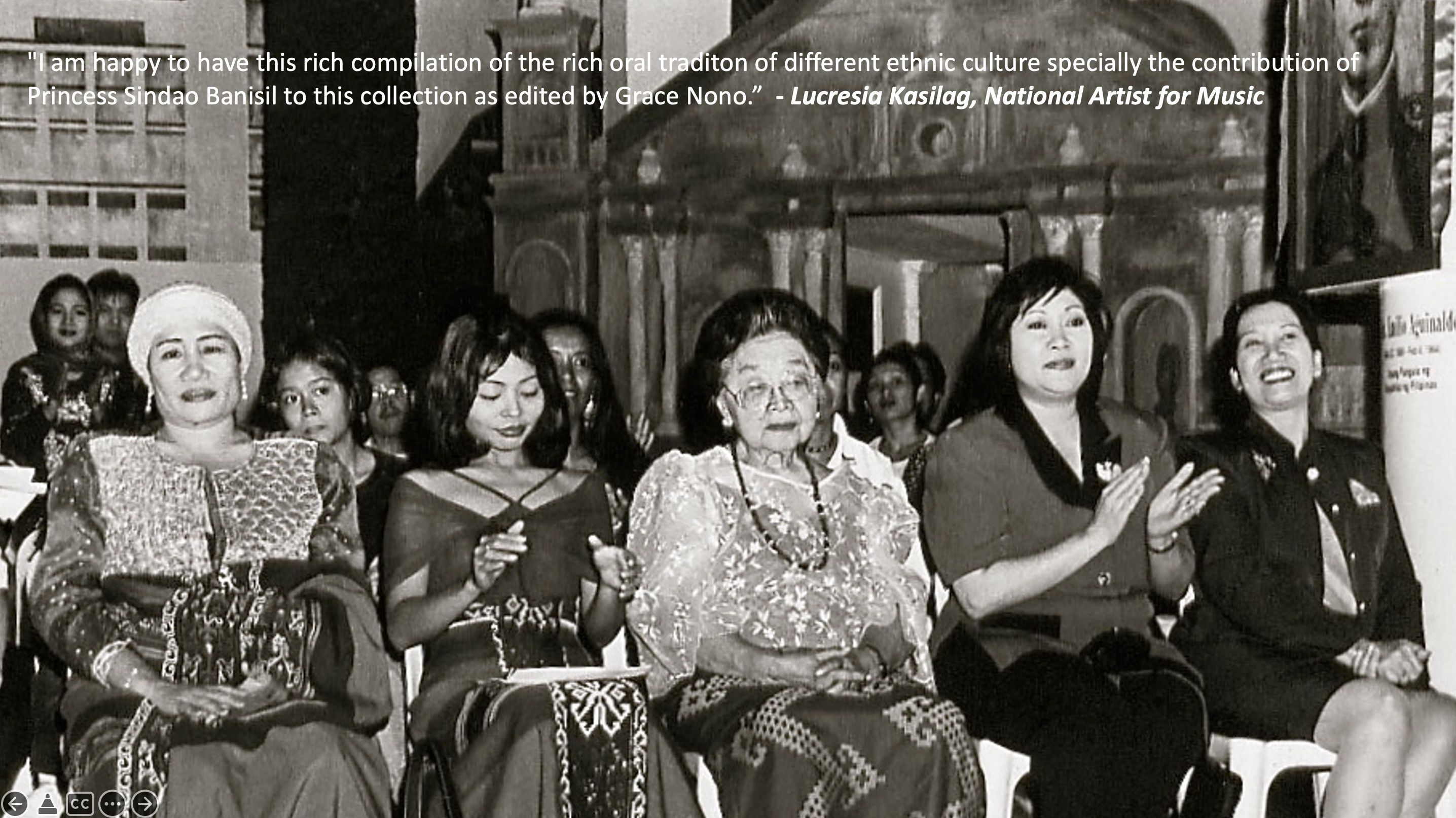
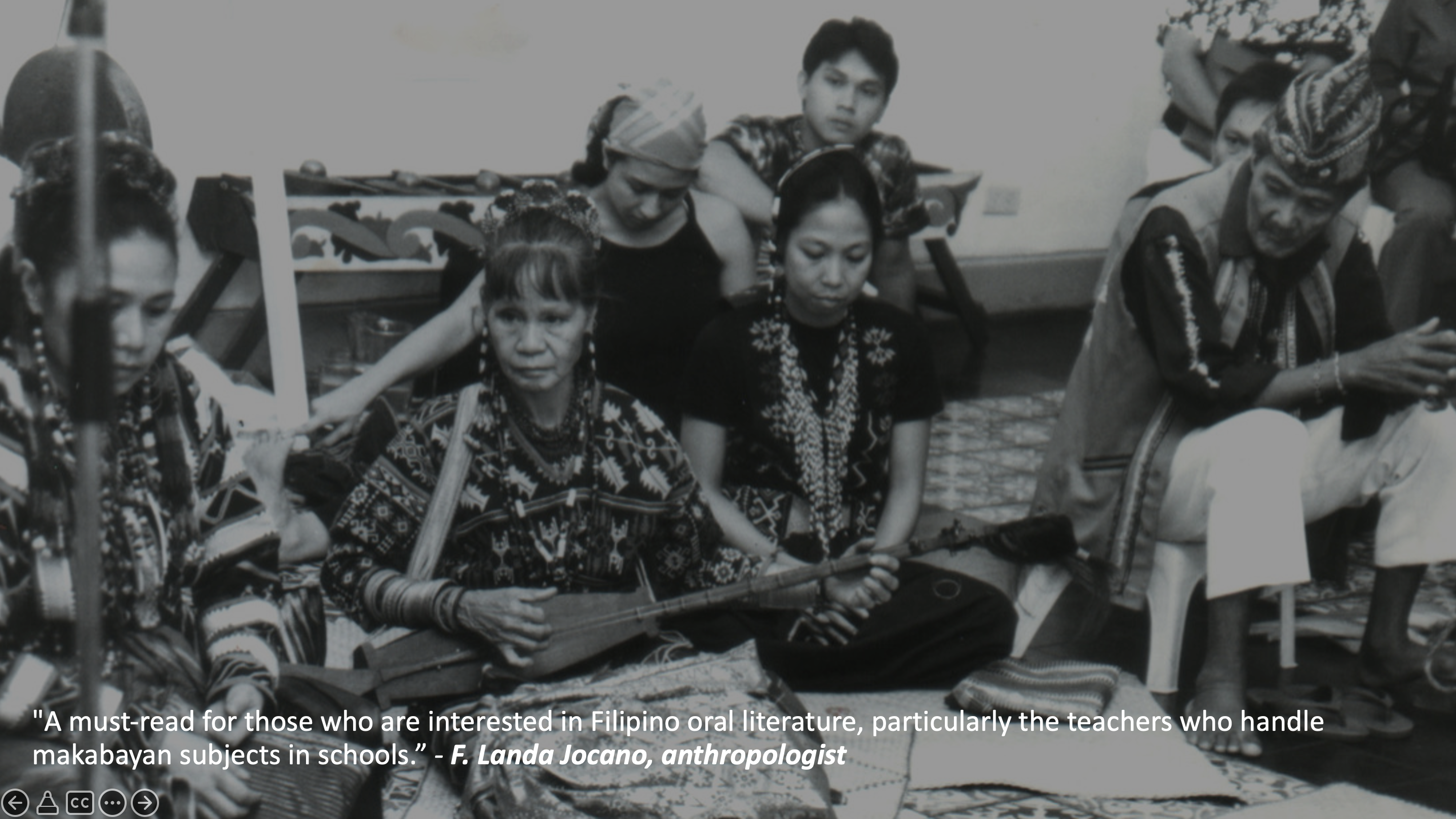
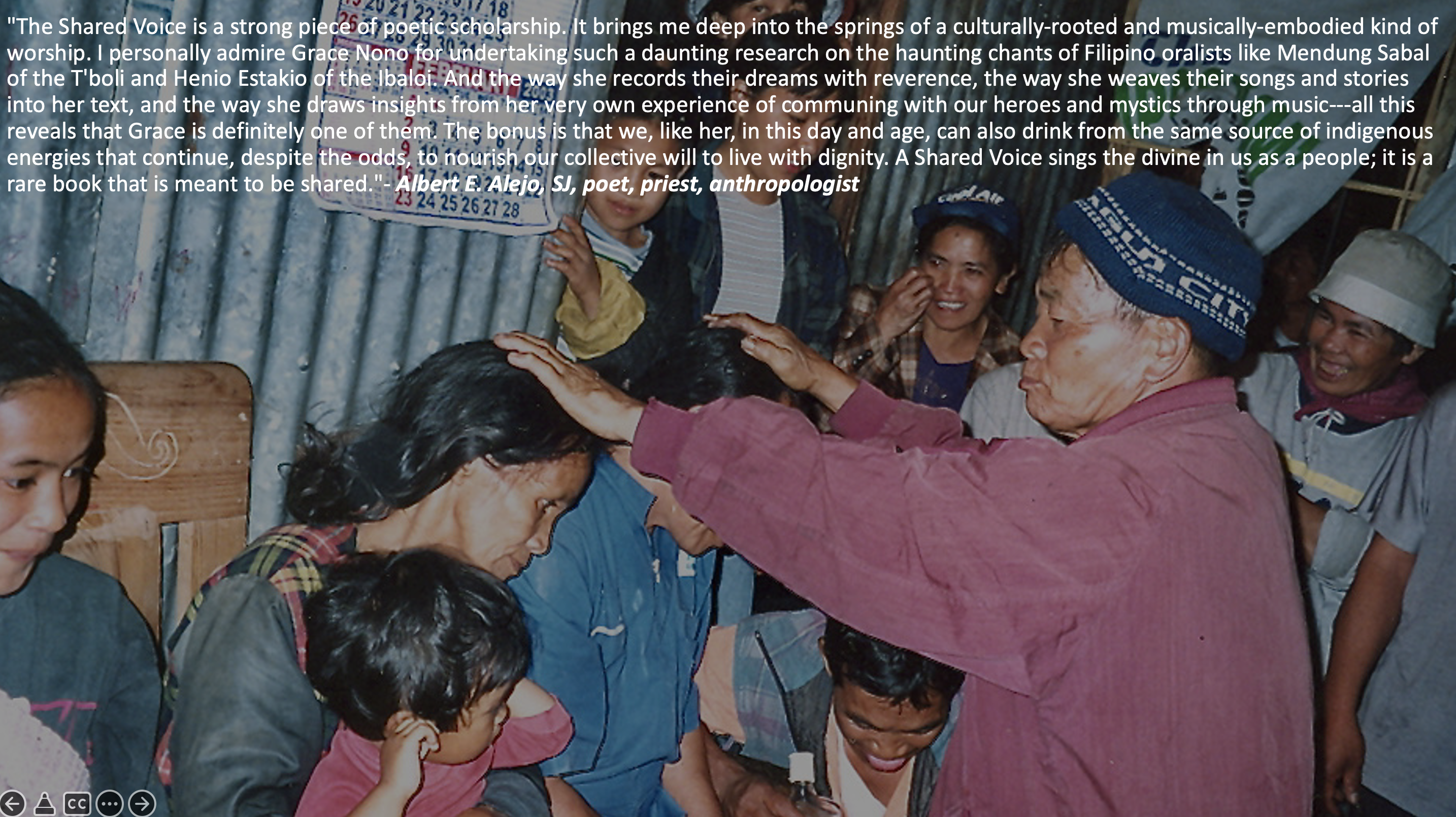
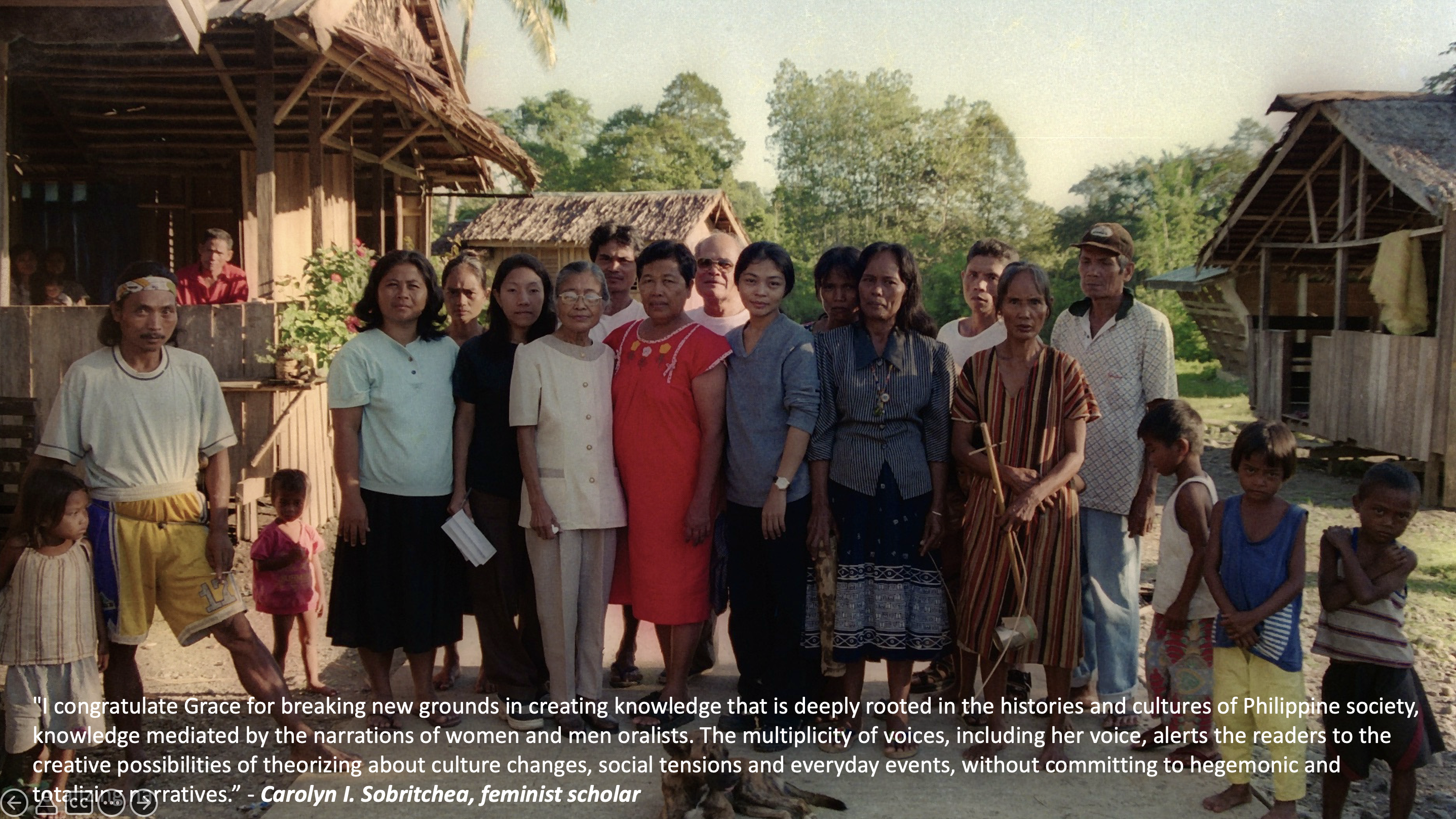

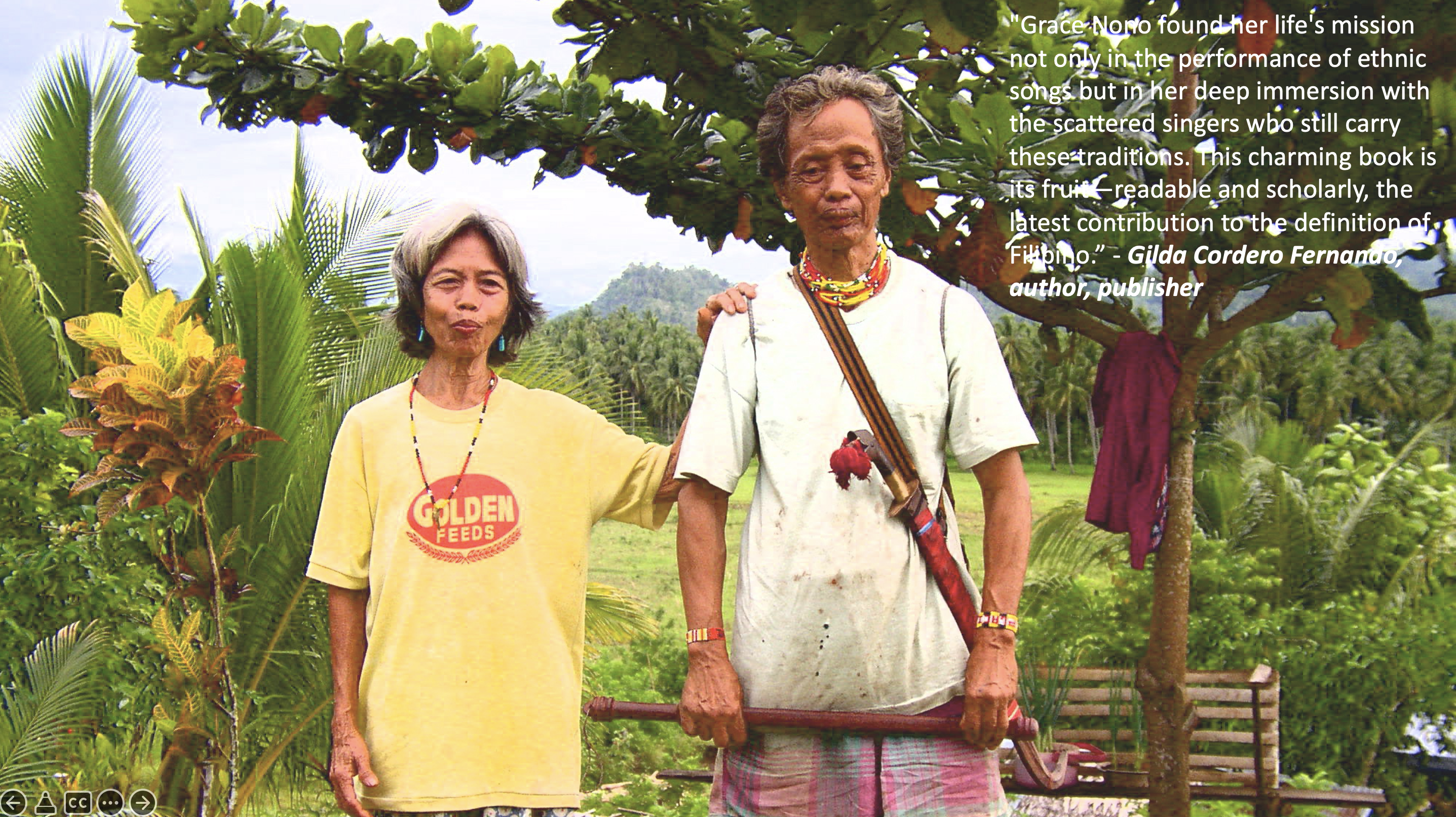
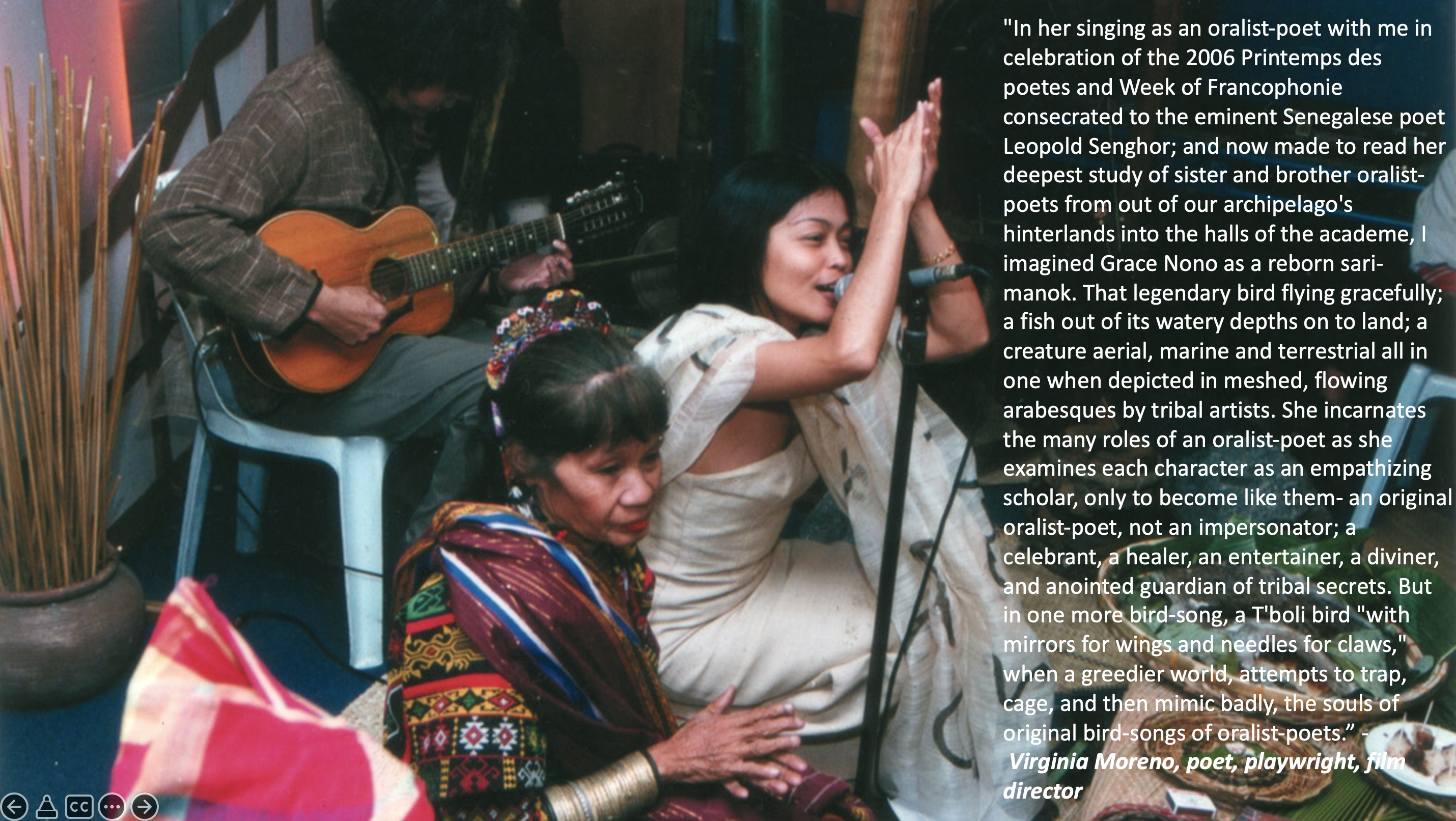
Book Reviews & Press
Babaylan Sing Back
The University of British Columbia –
Pacific Affairs
The University of Chicago Press – Journals
Bangkok Post
Book Chapters
/*! elementor – v3.7.8 – 02-10-2022 */
.elementor-widget-image-box .elementor-image-box-content{width:100%}@media (min-width:768px){.elementor-widget-image-box.elementor-position-left .elementor-image-box-wrapper,.elementor-widget-image-box.elementor-position-right .elementor-image-box-wrapper{display:-webkit-box;display:-ms-flexbox;display:flex}.elementor-widget-image-box.elementor-position-right .elementor-image-box-wrapper{text-align:right;-webkit-box-orient:horizontal;-webkit-box-direction:reverse;-ms-flex-direction:row-reverse;flex-direction:row-reverse}.elementor-widget-image-box.elementor-position-left .elementor-image-box-wrapper{text-align:left;-webkit-box-orient:horizontal;-webkit-box-direction:normal;-ms-flex-direction:row;flex-direction:row}.elementor-widget-image-box.elementor-position-top .elementor-image-box-img{margin:auto}.elementor-widget-image-box.elementor-vertical-align-top .elementor-image-box-wrapper{-webkit-box-align:start;-ms-flex-align:start;align-items:flex-start}.elementor-widget-image-box.elementor-vertical-align-middle .elementor-image-box-wrapper{-webkit-box-align:center;-ms-flex-align:center;align-items:center}.elementor-widget-image-box.elementor-vertical-align-bottom .elementor-image-box-wrapper{-webkit-box-align:end;-ms-flex-align:end;align-items:flex-end}}@media (max-width:767px){.elementor-widget-image-box .elementor-image-box-img{margin-left:auto!important;margin-right:auto!important;margin-bottom:15px}}.elementor-widget-image-box .elementor-image-box-img{display:inline-block}.elementor-widget-image-box .elementor-image-box-title a{color:inherit}.elementor-widget-image-box .elementor-image-box-wrapper{text-align:center}.elementor-widget-image-box .elementor-image-box-description{margin:0}
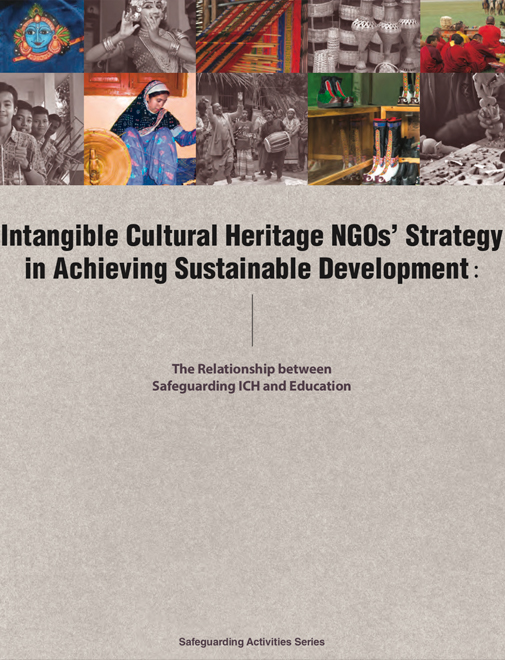
“Listen to Voices: The Tao Foundation Experience”
By Grace Nono, in Intangible Cultural Heritage – NGOs’ Strategy in Achieving Sustainable Development: The Relationship between Safeguarding Intangible Cultural Heritage and Education, 198-224 (Jeollabuk-do, Korea: International Information and Networking Centre for Intangible Cultural Heritage in the Asia Pacific Region under the Auspices of UNESCO, 2018).

“Audible Travels: Oral/Aural Traditional Performances and the Transnational Spread of a Philippine Indigenous Religion”
By Grace Nono, in Back from the Crocodile’s Belly: Philippine Babaylan Studies and the Struggle for Indigenous Memory, ed. Lily Mendoza and Leny Strobel, 29-45 (Sonoma, CA: Center for Babaylan Studies, 2013).

“Locating the Babaylan: Philippine Shamans and Discourses of Religion, Spirituality, Medicine and Healing”
By Grace Nono, in Spirituality and Health, 77-121 (Quezon City: Institute of Spirituality in Asia, 2017).

